Hyssop
히솝
ⓒ
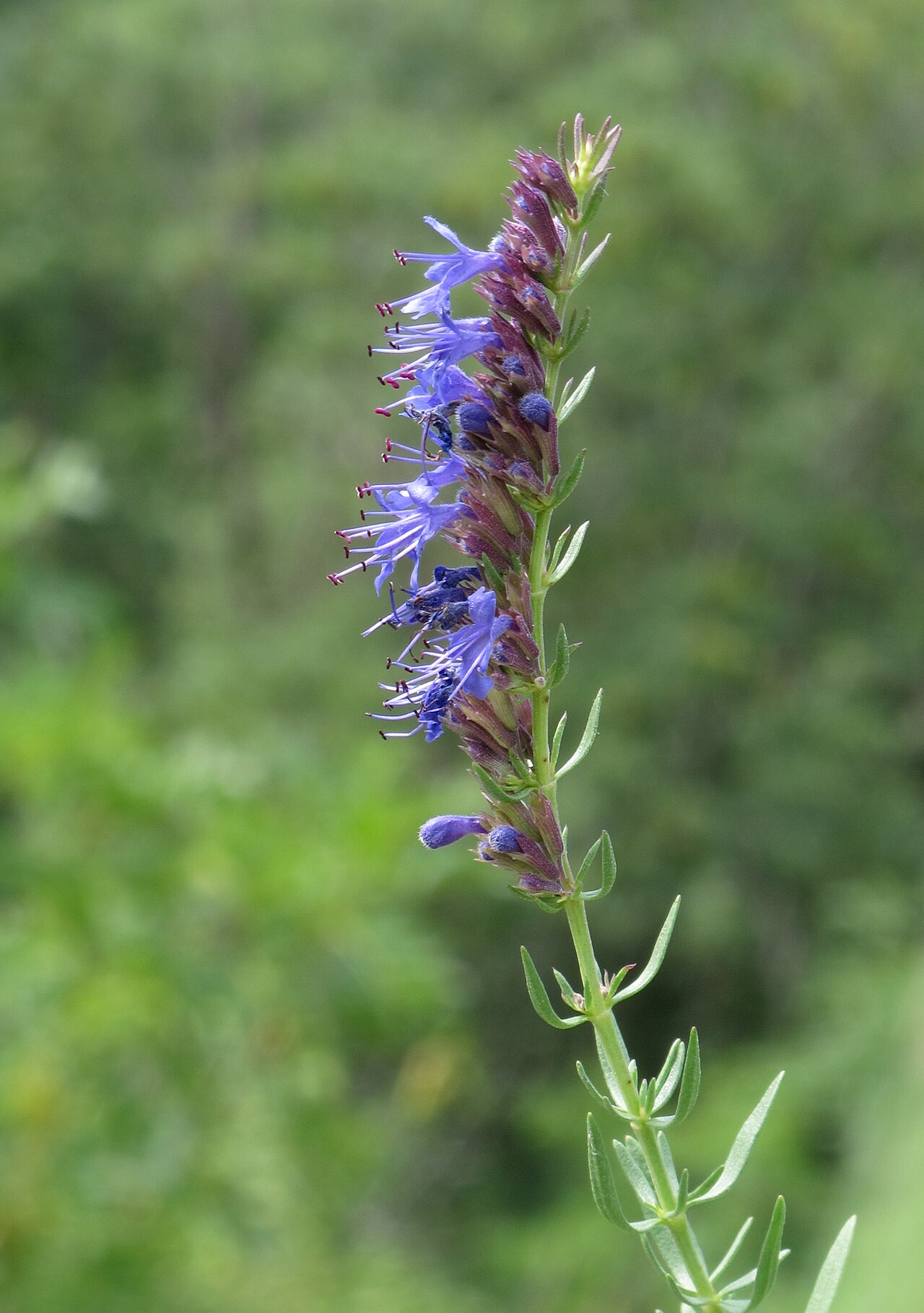
Photo: Robert Flogaus-Faust · CC BY 4.0 · Original file (Wikimedia Commons)
An herb that's cool like mint, bitter, and smells like pine. Most of absinthe's green color comes from this herb. Its aroma is very strong, so only a little is used in cooking.
Please read before eating. This herb needs some care. See cautions
Flavor and aroma
- It has a strong minty aroma, a bitter taste (from tannins) and notes of pine and camphor.
Fun facts
- It's an ingredient in the French liqueurs Chartreuse and Bénédictine.
- It's the main ingredient that gives absinthe its green color.
- It has long been mistaken for the "hyssop" in the Bible, but that isn't certain.
- Its name is similar to anise hyssop, but it's a plant from a different genus.
In the kitchen
Drinks
- Make it into a syrup and use it instead of bitters in cocktails. Drink it as herbal tea with honey, and use the flowers to garnish cocktails.
Desserts
- Add it to fruit compote (stewed fruit).
Cooking
- Add just a little to soups, stews, sauces and meat dishes. Use it in French cassoulet (a bean and meat stew) and roasted vegetables too.
Seasoning
- Use dried hyssop leaves instead of thyme in za'atar, the Middle Eastern seasoning.
Goes well with
Fatty meatBeansFruitHoneyBourbonMezcal
Tips
- It can easily overpower a dish, so use very little. It can be dried and stored.
Season
We're still checking the season. We'll add it once we find a source.
Details
- Korean name
- 히솝
- English names
- hyssop
- Scientific name
- Dracocephalum officinale
- Former scientific names
- Hyssopus officinalis
- Family
- Lamiaceae
- Genus
- Dracocephalum
Cautions
Hyssop essential oil can cause seizures, and just a few drops can be dangerous for children. Use only small amounts of the leaves in cooking, and don't consume the oil.
Show sources for this page
References for this herb
- Wikipedia
- NC State Extension
- Specialty Produce
- Eat Your Books
- Cooksinfo
Name and classification
Photo
Robert Flogaus-Faust · CC BY 4.0 · Original file (Wikimedia Commons)