Bog myrtle
보그 머틀
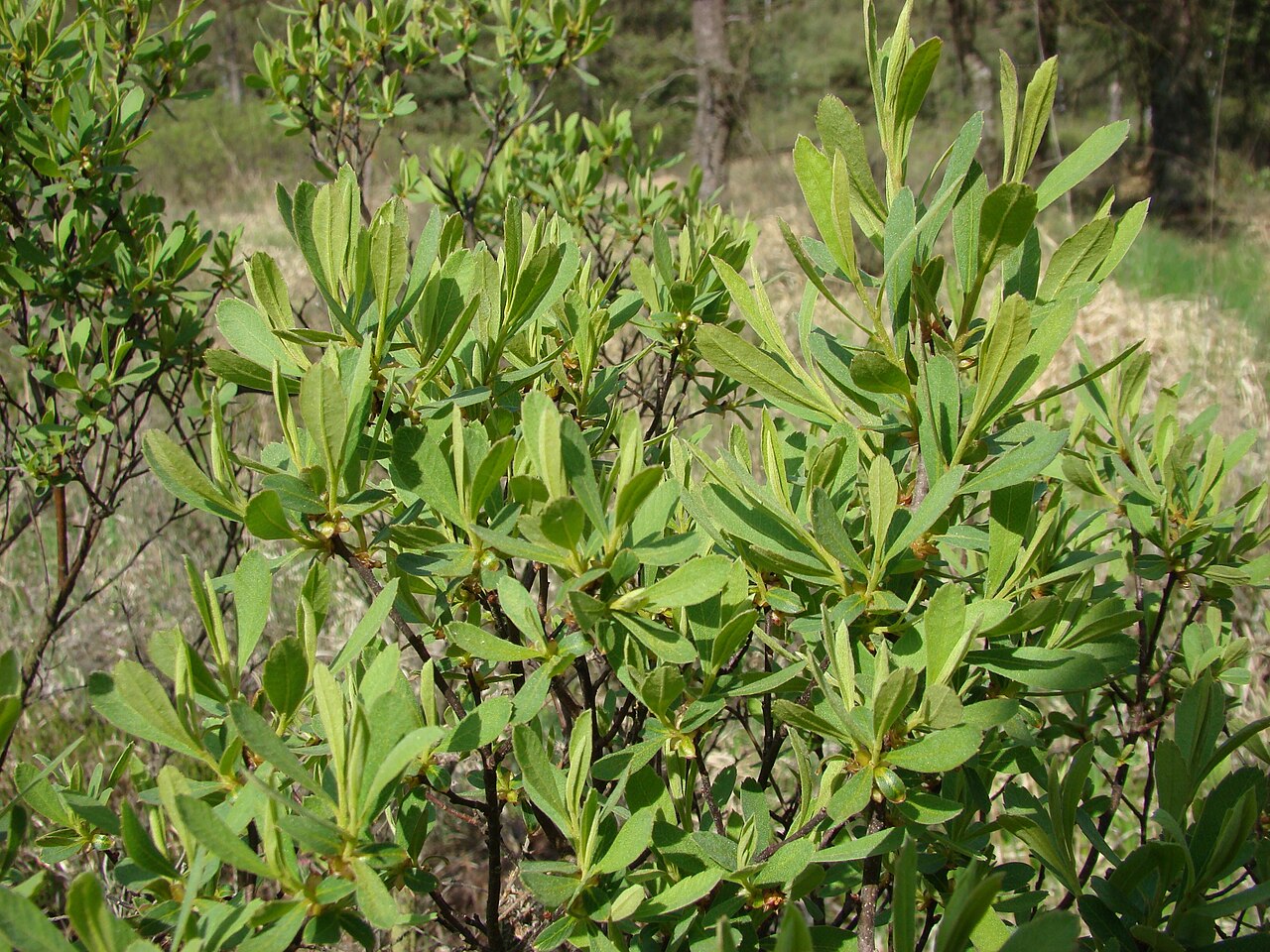
ⓒ
Photo: Photographer and uploader was Hajotthu at de.wikipedia · CC BY-SA 3.0 · Original file (Wikimedia Commons)
Before hops were used, this herb gave medieval European beer its bitterness and aroma. Rub a leaf and your hands smell fragrant for hours. Some breweries in Belgium and Britain still make beer with it.
Please read before eating. This herb needs some care. See cautions
Flavor and aroma
- It has a resinous fragrance and a bitter, astringent taste.
- Drying makes the aroma stronger.
Fun facts
- It's the key ingredient in gruit, the herb mixture added to beer in medieval Netherlands, Belgium and Germany.
- In Scandinavia it was used in beer until fairly recently under the name pors.
- In the past it was tucked into fabric to keep moths away.
- Beers with this herb are still made today, such as Belgium's Gageleer and Britain's Myrica Ale.
In the kitchen
Alcohol
- Use it in brewing instead of or alongside hops (gruit ale).
Cooking
- There are records of it being used in cooking in Sweden, Britain and northern France.
Seasoning
- Use the dried berries as a spice.
Goes well with
BeerMugwortOrange
Season
We're still checking the season. We'll add it once we find a source.
Details
- Korean name
- 보그 머틀
- English names
- bog myrtle, sweet gale
- Scientific name
- Myrica gale
- Family
- Myricaceae
- Genus
- Myrica
Cautions
Never eat it if you're pregnant or might be pregnant (there are records that it can cause miscarriage). It's known to be mildly toxic, so use only a little.
Show sources for this page
References for this herb
- Craft Beer & Brewing
- The Met Cloisters 블로그
- Gernot Katzer's Spice Pages
- Plants For A Future(Wikipedia 인용)
- Quackin' Grass Nursery
Name and classification
Photo
Photographer and uploader was Hajotthu at de.wikipedia · CC BY-SA 3.0 · Original file (Wikimedia Commons)