Sweet cicely
스위트 시슬리
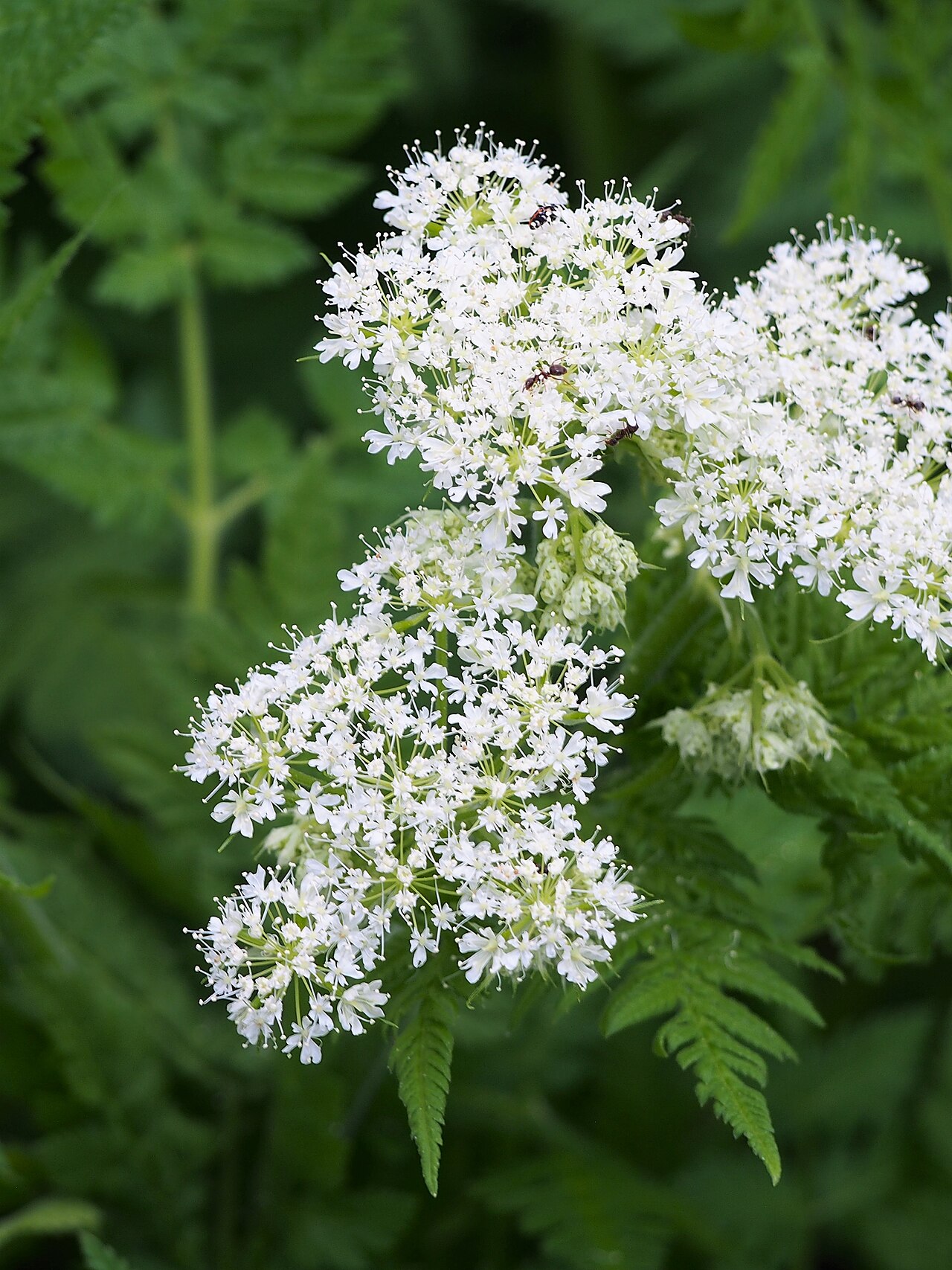
ⓒ
Photo: Agnieszka Kwiecień, Nova · CC BY-SA 4.0 · Original file (Wikimedia Commons)
Its soft, fern-like leaves have a sweet licorice aroma. Cooked with tart fruit, it softens the sourness, so you can use much less sugar.
Flavor and aroma
- It's sweet with a licorice and anise aroma, plus a hint of celery.
- The leaves, flowers, seeds and roots are all edible.
Fun facts
- The sweetness comes from anethole, a substance much sweeter than sugar.
- It's the only species in the genus Myrrhis.
- It's known as an ingredient in Chartreuse, a French monastery liqueur, and has long been used in aquavit, a traditional Nordic spirit.
- There's also a story that its leaves were once used to polish oak paneling.
In the kitchen
Drinks
- Add the leaves to tea like a sweetener, or infuse the seeds in gin or vodka.
Desserts
- Leaves or seeds in cream make it feel less heavy. There's a recipe for panna cotta with rhubarb and sweet cicely syrup.
- Line a cake tin with fresh leaves before baking, or stir it into yogurt or whipped cream like a sweetener. Candy the green seeds in sugar syrup.
Fruit dishes
- Add a few sprigs when cooking rhubarb, gooseberries, currants or tart apples. It reduces the sourness so you need less sugar. Rhubarb can even be cooked with just orange juice and the leaves.
- Add the unripe green seeds whole to fruit salads.
Cooking
- Chop it into egg dishes such as omelets, or add it to soups and stews. The roots can be boiled like parsnips or added to salads.
Goes well with
RhubarbGooseberryCurrantAppleOrangeCreamVanillaEggs
Tips
- Eat the seeds while they're green. Once ripe and black, they have almost no flavor.
Season
We're still checking the season. We'll add it once we find a source.
Details
- Korean name
- 스위트 시슬리
- English names
- sweet cicely, garden myrrh, sweet chervil
- Scientific name
- Myrrhis odorata
- Family
- Apiaceae
- Genus
- Myrrhis
Cautions
In the United States, the same English name (sweet cicely) refers to a different plant called Osmorhiza. Be careful not to mix them up.
Show sources for this page
References for this herb
- Oxford University Herbaria
- Herb Society(영국)
- Country Life
- Richters(Bown, Encyclopedia of Herbs 인용)
- Cooksinfo
- Gernot Katzer's Spice Pages
Name and classification
Photo
Agnieszka Kwiecień, Nova · CC BY-SA 4.0 · Original file (Wikimedia Commons)