Wood sorrel
우드 소렐
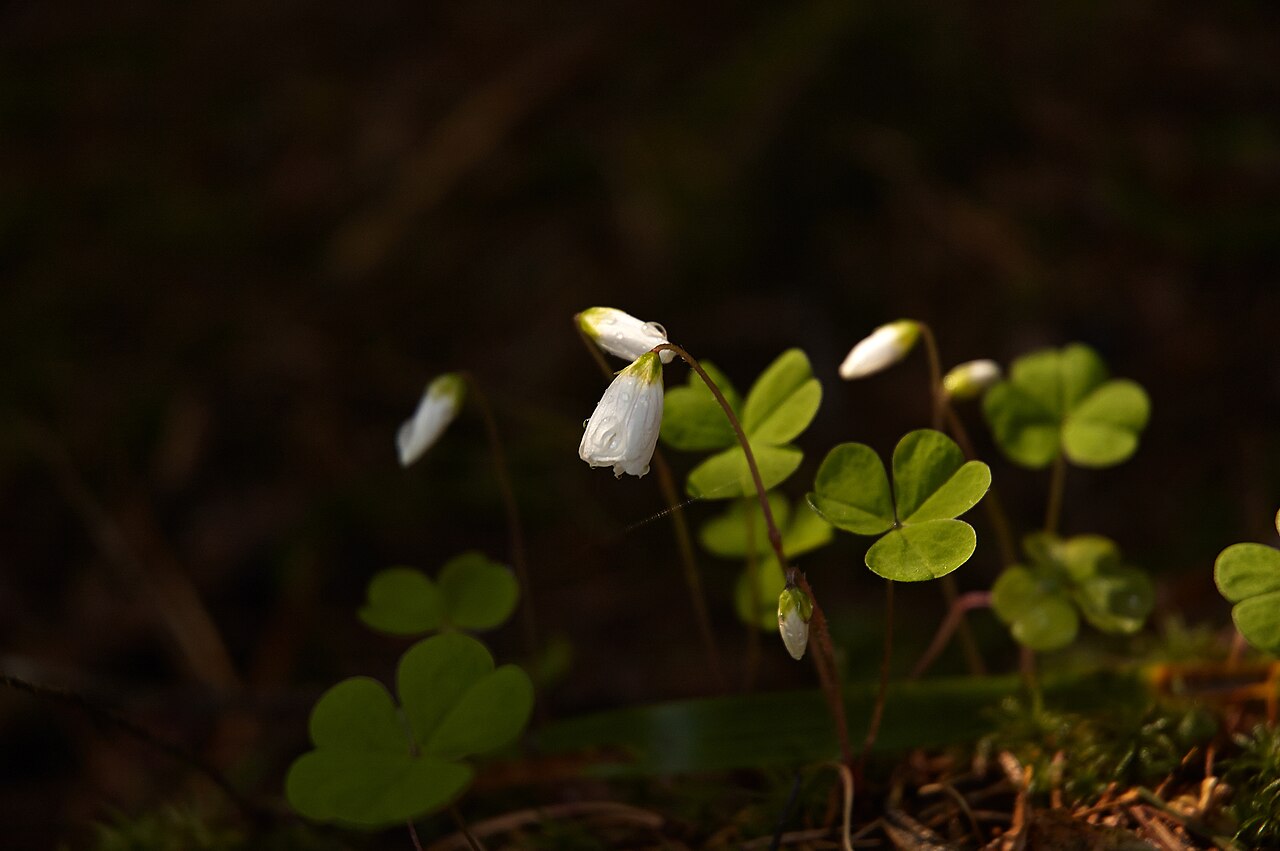
ⓒ
Photo: Dmitry Makeev · CC BY-SA 4.0 · Original file (Wikimedia Commons)
It looks like clover, but one bite is as sour as lemon and apple peel. It belongs to the same group as the creeping wood sorrel (gwaengi-bap) often seen by Korean roadsides.
Please read before eating. This herb needs some care. See cautions
Flavor and aroma
- It has a sharp sourness like lemon and apple peel (from oxalic acid).
Fun facts
- The scientific name Oxalis comes from the Greek for "acid," and acetosella from the Latin for "sour."
- Unlike clover, its leaves are made of three heart-shaped leaflets.
- It has the nickname "Alleluia."
In the kitchen
Raw
- Add the leaves and flowers raw to salads. Use it instead of lemon or lime when you want a sour note.
Drinks
- Float it on a gin and tonic as a garnish, or muddle it with other herbs in cocktails such as a mojito.
Cooking
- Serve it with fish dishes, or put it on rich or heavy dishes to freshen the taste.
Goes well with
FishGinOther herbs
Tips
- Cooking reduces the oxalic acid. It's usually used in small amounts as a garnish or side.
Season
We're still checking the season. We'll add it once we find a source.
Details
- Korean name
- 우드 소렐
- English names
- wood sorrel, common wood sorrel
- Scientific name
- Oxalis acetosella
- Family
- Oxalidaceae
- Genus
- Oxalis
Cautions
It contains oxalic acid, and eating a lot can interfere with calcium absorption. People with kidney stones, gout or arthritis, or who take blood thinners, shouldn't eat much of it.
Show sources for this page
References for this herb
- Plants of the World Online
- Woodland Trust
- Galloway Wild Foods
- Foraging Course Company
- Useful Temperate Plants
- Wild Food UK
Name and classification
Photo
Dmitry Makeev · CC BY-SA 4.0 · Original file (Wikimedia Commons)