Culantro
쿨란트로
ⓒ
Photo: Filo gèn' · CC BY-SA 4.0 · Original file (Wikimedia Commons)
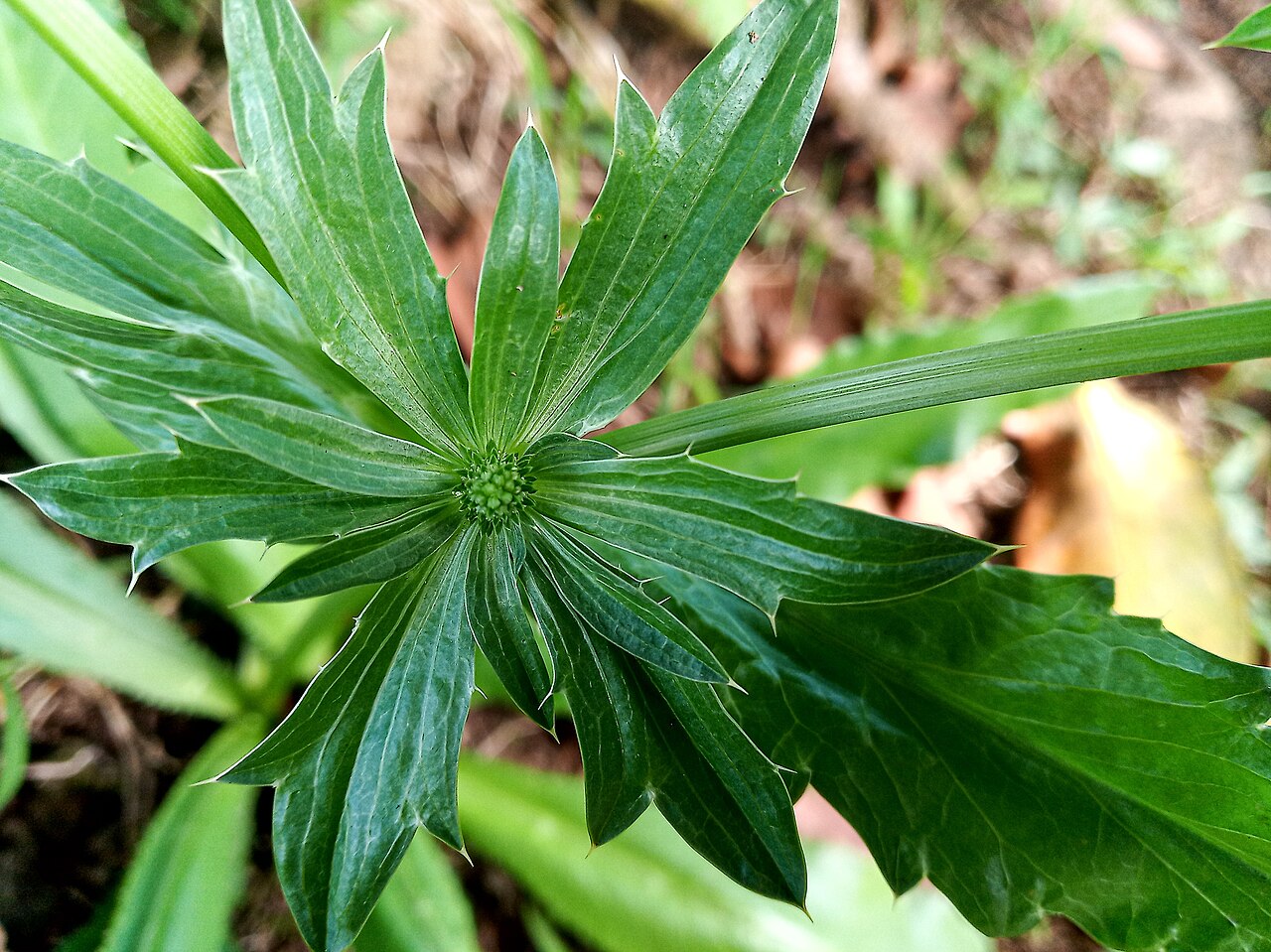
Its name and taste are similar to cilantro, but the aroma is several times stronger. The leaf edges are saw-toothed, so it's also called "sawtooth coriander." It's the long leaf served alongside Vietnamese pho.
Flavor and aroma
- It's similar to cilantro but much more intense, with a deep, earthy aroma.
- It's so strong that just brushing it releases the scent.
Fun facts
- The scientific name Eryngium foetidum means "stinking thistle."
- It's in the same family as cilantro (the carrot family) but a different genus. It's a relative of the garden plant sea holly.
- It's said that Europeans brought it from the Caribbean to Southeast Asia.
- In Vietnamese it's called ngò gai.
In the kitchen
Raw
- Serve it with Vietnamese pho. Add just a little to salsa, beans or egg dishes.
Cooking
- It's a key ingredient in sofrito and recaíto, basic seasonings in Caribbean and Puerto Rican cooking.
- Add it to stews, bean dishes, lentil soup, rice dishes and meat marinades. Unlike cilantro, its aroma holds up to cooking.
Sauces
- Blend it into spicy Indian chutneys.
Goes well with
MeatBeansRiceChiliGarlic
Tips
- The leaves are tough, so chop them finely. It's much stronger than cilantro, so use less. It's usually added early in cooking to release its aroma.
Season
We're still checking the season. We'll add it once we find a source.
Details
- Korean name
- 쿨란트로
- English names
- culantro, sawtooth coriander, shado beni
- Scientific name
- Eryngium foetidum
- Family
- Apiaceae
- Genus
- Eryngium
- Other names and notes
- Vietnamese: ngò gai
Show sources for this page
References for this herb
- Specialty Produce
- Food Republic
- Tasting Table
- Flora Costaricensis
- Gernot Katzer's Spice Pages(Clove Garden)
Name and classification
Photo
Filo gèn' · CC BY-SA 4.0 · Original file (Wikimedia Commons)