Lemon myrtle
레몬 머틀
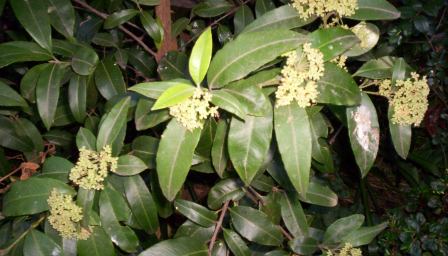
ⓒ
Photo: HelloMojo · CC BY-SA 3.0 · Original file (Wikimedia Commons)
Leaves from a tree that grows in Australian rainforests. Rub one and a strong lemon scent bursts out. It's known as the plant with the most lemon-scent compound (citral) in nature. Aboriginal Australians have eaten it for a very long time.
Flavor and aroma
- It has a very strong, clean lemon scent, similar to lemongrass.
Fun facts
- Over 90% of the oil from its leaves is citral, the lemon-scent compound. It's the plant with the most citral in nature.
- Aboriginal Australians have long used it in food and traditional healing.
- It drew attention again when native Australian ingredients were promoted during the 2000 Sydney Olympics.
- The scientific name comes from the British botanist James Backhouse.
In the kitchen
Drinks
- Make tea with fresh or dried leaves.
Desserts
- Use dried leaf powder instead of lemon in cakes, biscuits and shortbread.
Cooking
- Add whole leaves like bay leaves to flavor a dish, then remove them. Bake fish with the leaves or add them to chicken dishes.
- Give pasta a lemon aroma, or steep the leaves in macadamia oil or cooking oil to make flavored oil.
Goes well with
FishChickenButter cookiesPasta
Tips
- Dry the leaves and grind them in a coffee grinder to use as a powder.
Season
We're still checking the season. We'll add it once we find a source.
Details
- Korean name
- 레몬 머틀
- English names
- lemon myrtle, lemon-scented myrtle
- Scientific name
- Backhousia citriodora
- Family
- Myrtaceae
- Genus
- Backhousia
- Other names and notes
- Native to Queensland, Australia
Show sources for this page
References for this herb
- Foods 학술지(2021, 레몬 머틀 시트랄 연구)
- PROSEA
- Australian Native Plants Society
- FoodNavigator
- Wikipedia
Name and classification
Photo
HelloMojo · CC BY-SA 3.0 · Original file (Wikimedia Commons)