Mexican tarragon
멕시칸 타라곤
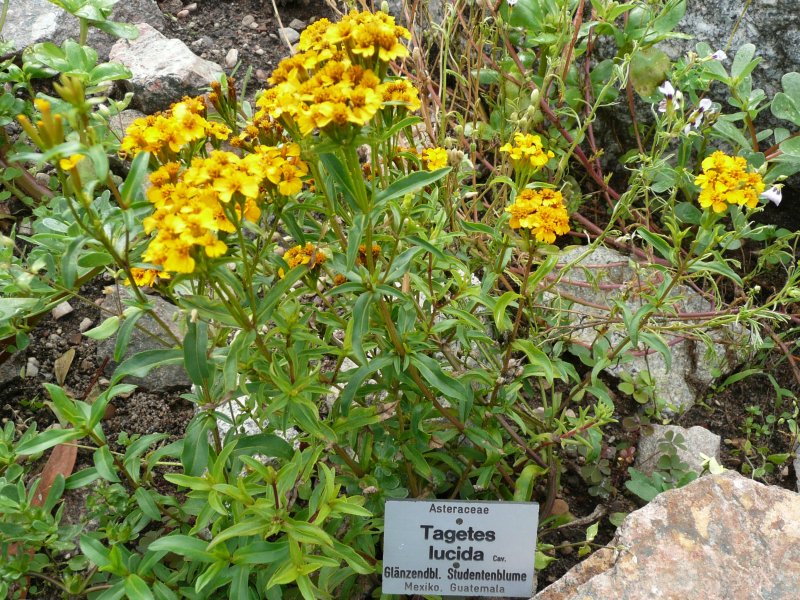
ⓒ
Photo: manfred.sause@volloeko.de · CC BY-SA 3.0 · Original file (Wikimedia Commons)
It has flowers like yellow marigolds, and its leaves have a sweet licorice aroma. It's grown as a substitute for French tarragon, which doesn't grow well in hot places. The Aztecs used its leaves to flavor cocoa drinks.
Flavor and aroma
- It has a sweet anise and licorice aroma. Many say it's similar to French tarragon but stronger.
Fun facts
- Despite the name tarragon, it's actually a close relative of marigolds.
- The Aztecs are said to have added it to cocoa drinks and used it as ceremonial incense offered to Tlaloc, the rain god.
- The flowers are edible too.
In the kitchen
Drinks
- Make herbal tea with fresh leaves or use it to flavor drinks.
Cooking
- Use it instead of French tarragon in fish, chicken, chicken salad, soups and sauces.
Sauces
- Make an herb vinegar with it for salad dressing.
Garnish
- Lay young leaves under grilled meat or vegetables, or mix them into salads.
Goes well with
FishChickenVinegar
Tips
- It's sensitive to heat, so add it at the end. It's strong, so add a little at a time. To keep it longer, freeze it or store it in vinegar.
Season
We're still checking the season. We'll add it once we find a source.
Details
- Korean name
- 멕시칸 타라곤
- English names
- Mexican tarragon, Mexican mint marigold, Texas tarragon
- Scientific name
- Tagetes lucida
- Family
- Asteraceae
- Genus
- Tagetes
Show sources for this page
References for this herb
- Wikipedia(Tarragon)
- NParks(싱가포르 국립공원청)
- University of Florida IFAS
- Specialty Produce
- Bonnie Plants
Name and classification
Photo
manfred.sause@volloeko.de · CC BY-SA 3.0 · Original file (Wikimedia Commons)