Fish mint
어성초
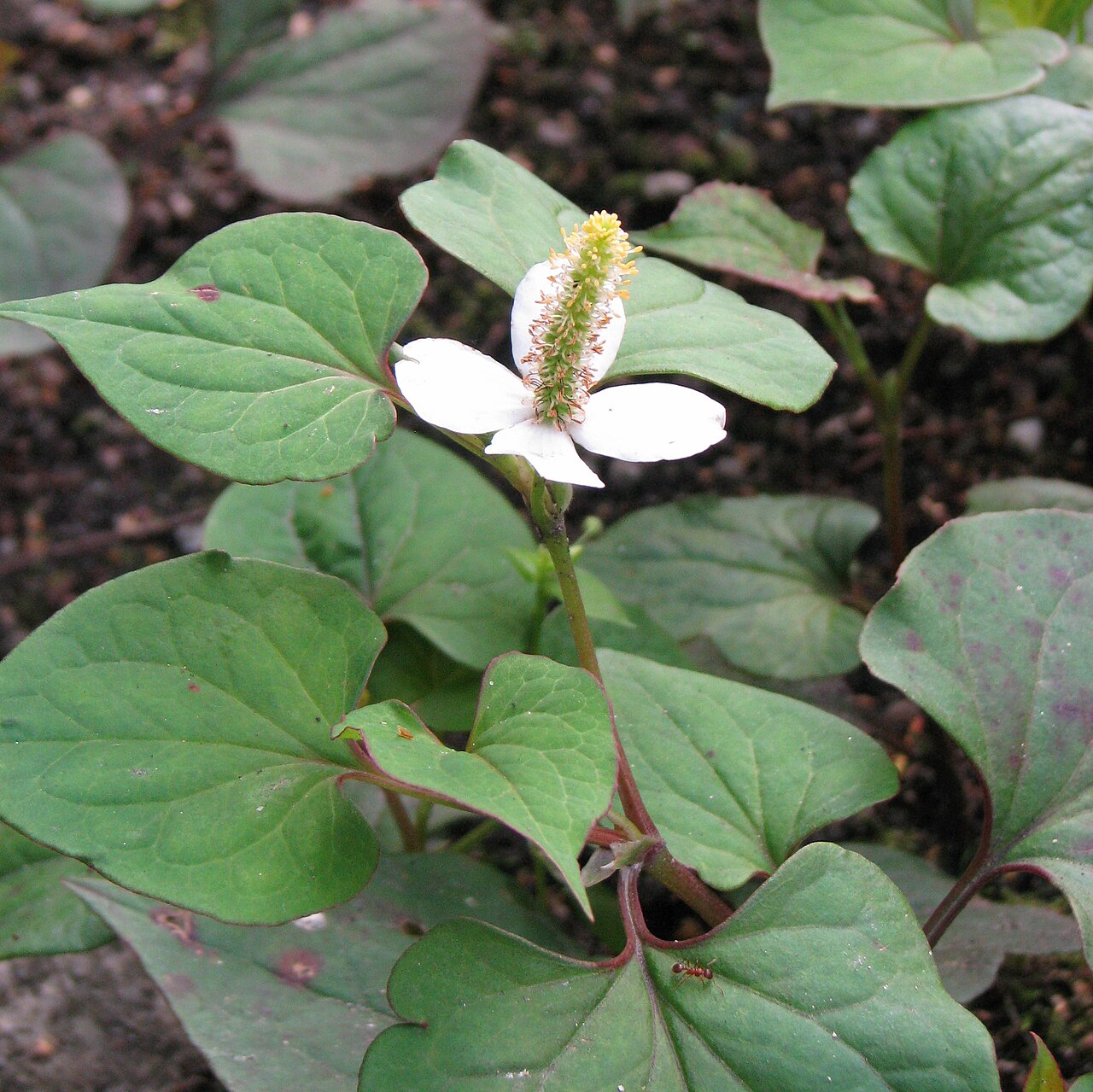
ⓒ
Photo: Agnieszka Kwiecień, Nova · CC BY-SA 4.0 · Original file (Wikimedia Commons)
Its Korean name, eoseongcho, literally means "fish-smelling herb." Rub the leaves and they really do smell fishy. In Korea it's mostly drunk as tea, but in Vietnam it's an herb eaten generously with wraps and noodles.
Flavor and aroma
- It has a fishy aroma that reminds you of fish (people either love it or hate it).
- Some also say it smells like rau ram and leaves an astringent aftertaste.
Fun facts
- The fishy aroma comes from a compound called decanoyl acetaldehyde.
- Its Chinese name yuxingcao (魚腥草) means "fishy-smelling herb." The Korean name eoseongcho uses the same characters.
- In Japan and Korea it's used more as tea than as food, while in Vietnam, northeast India and southern China it's eaten as a vegetable.
- Its leaves are heart-shaped, and colorful ornamental varieties are called "chameleon plant."
In the kitchen
Raw
- Serve it as an herb with Vietnamese rice paper rolls and bánh xèo (Vietnamese pancake).
Drinks
- In Korea and Japan the dried leaves are made into tea.
Cooking
- Pile it onto grilled meat and noodle salads (such as bún chả). There's also a beef stir-fry with fish mint salad.
Sauces
- In northeast India it's blended with onion and chili into a chutney.
Roots
- In southern China the rhizomes are eaten too. They taste milder than the leaves.
Goes well with
GarlicChiliFermented foodsGrilled meatFish
Tips
- It's strong, so start with a little mixed with other herbs.
Season
We're still checking the season. We'll add it once we find a source.
Details
- Korean name
- 어성초
- English names
- fish mint, chameleon plant, heartleaf
- Scientific name
- Houttuynia cordata
- Family
- Saururaceae
- Genus
- Houttuynia
- Other names and notes
- Vietnamese: diếp cá, Korean: eoseongcho, yakmomil
Show sources for this page
References for this herb
- Wikipedia
- Gernot Katzer's Spice Pages
- Atlas Obscura
Name and classification
Photo
Agnieszka Kwiecień, Nova · CC BY-SA 4.0 · Original file (Wikimedia Commons)