Makrut lime leaf
마크루트 라임잎
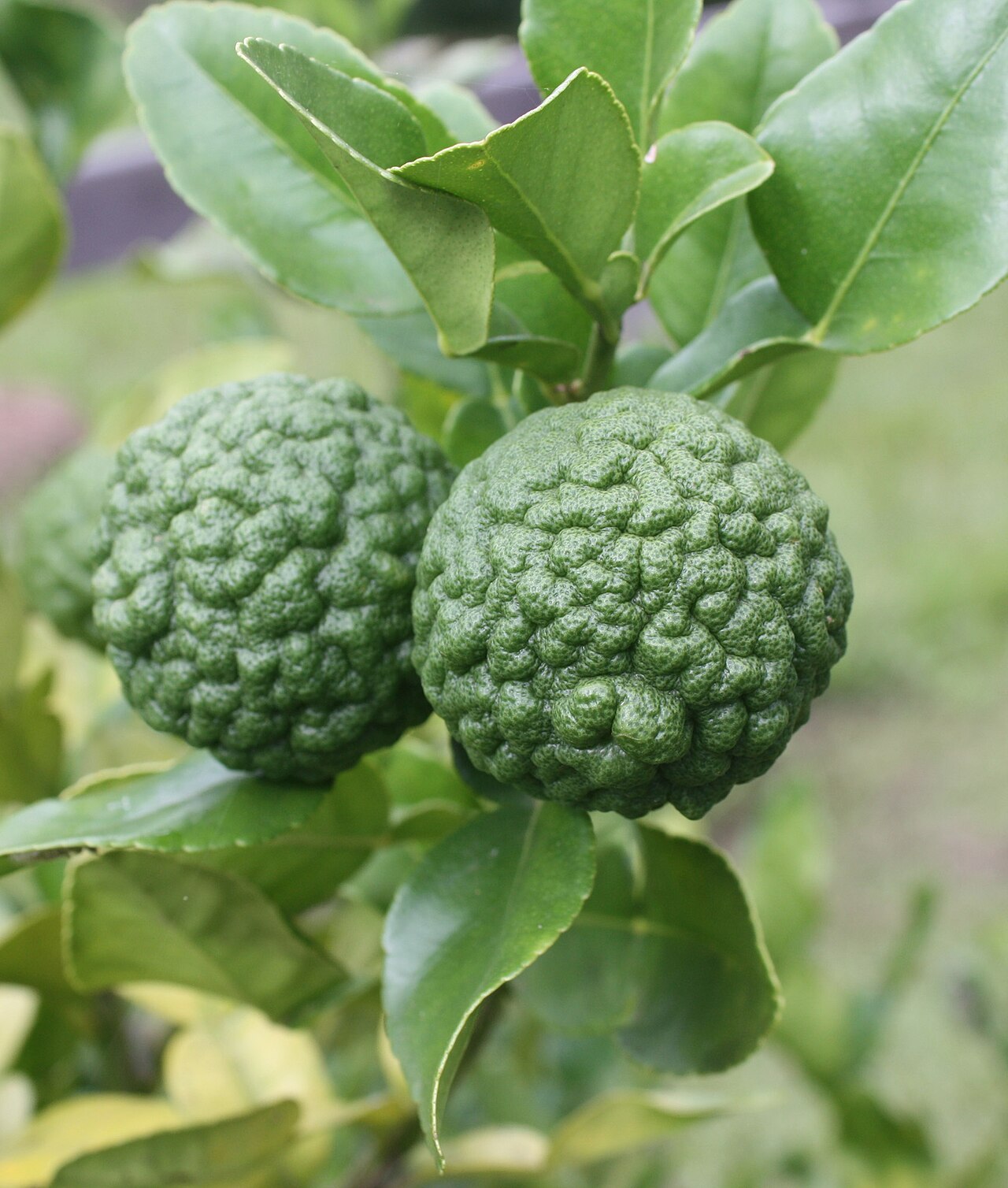
ⓒ
Photo: Robyn Jay from Sydney, Australia · CC BY-SA 2.0 · Original file (Wikimedia Commons)
A curious leaf made of two leaves joined end to end like an hourglass. Tear it and a strong aroma spreads, like freshly grated lime zest. That fresh aroma in Thai tom yum soup comes from this leaf.
Flavor and aroma
- It has a strong lime aroma with hints of mandarin and lemon, bright like a floral scent.
- Chewing a fresh leaf feels like chewing very thin lime peel.
Fun facts
- What looks like one leaf is actually a "double leaf": the leaf blade joined to a widened leaf stalk.
- Its old name, "kaffir lime," is considered offensive in many regions, so "makrut lime" is now recommended.
- It's also called "the bay leaf of Southeast Asia."
In the kitchen
Cooking
- Add it to fried rice and stir-fries. In Vietnam it's used to flavor chicken dishes, and it goes into kroeung, a basic Cambodian seasoning paste.
- Stuff it inside fish with lemongrass and steam.
Soups
- Tear the leaves into Thai soups such as tom yum and tom kha gai, curries and stews to infuse their aroma.
Curries
- Add it to red, green and panang curries. Shred it very finely to top panang curry.
Goes well with
LemongrassGalangalGingerGarlicChiliCoconut milkChickenPorkShrimp
Tips
- The central vein is tough, so remove it when eating raw. Fresh, dried and frozen leaves can all be used. Check whether "1 leaf" in a recipe means the whole double leaf or one half.
Season
We're still checking the season. We'll add it once we find a source.
Details
- Korean name
- 마크루트 라임잎
- English names
- makrut lime leaf, Thai lime leaf
- Scientific name
- Citrus hystrix
- Family
- Rutaceae
- Genus
- Citrus
Show sources for this page
References for this herb
- Specialty Produce
- GBIF
- Herb Society of America
- Hot Thai Kitchen
- The Spice House
Name and classification
Photo
Robyn Jay from Sydney, Australia · CC BY-SA 2.0 · Original file (Wikimedia Commons)