Epazote
에파조테
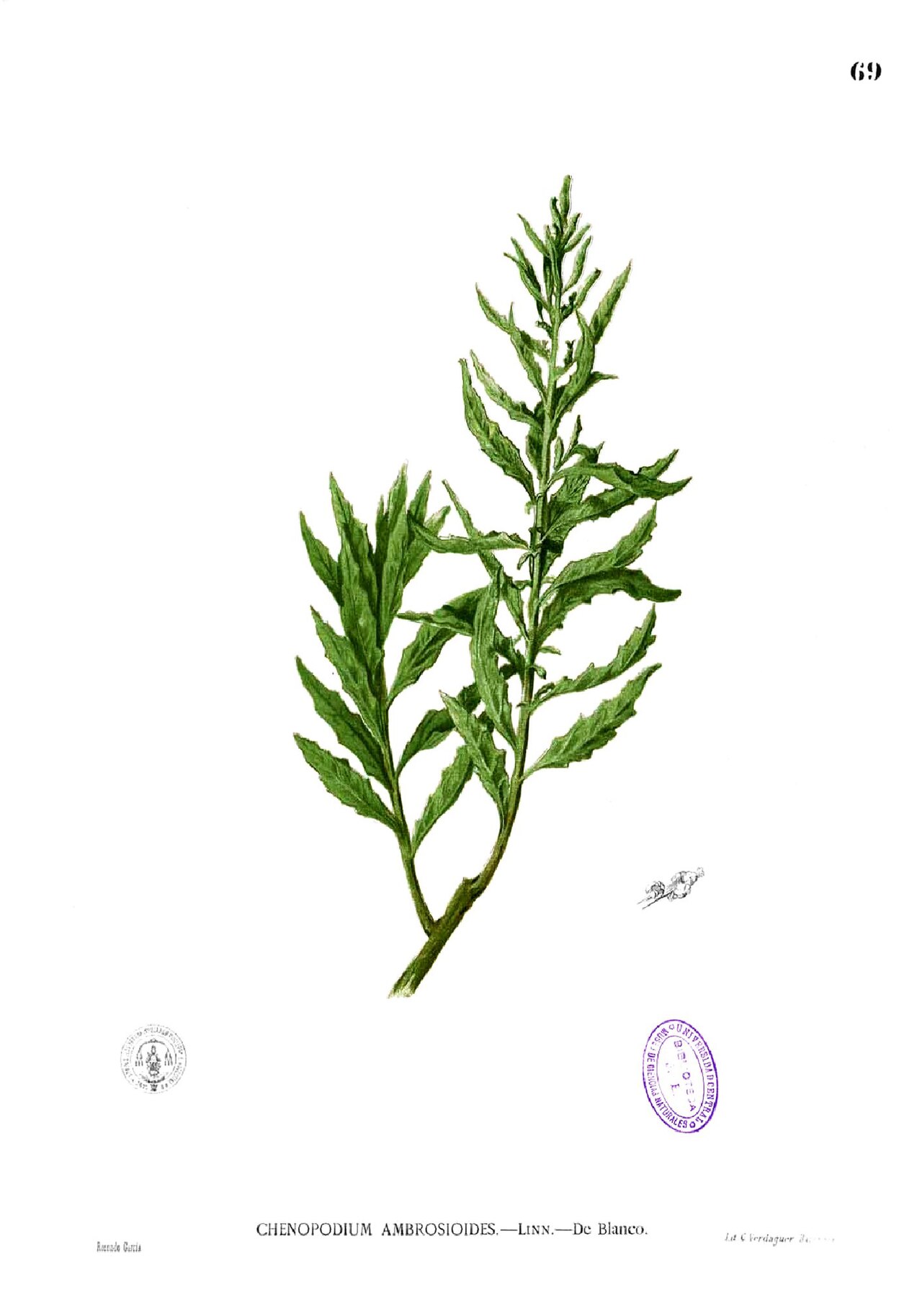
ⓒ
Photo: Francisco Manuel Blanco (O.S.A.) · Public domain · Original file (Wikimedia Commons)
The aroma is so strong and unusual that the first time you smell it you may wonder, "People eat this?" In Mexico it's always added when cooking black beans. The name comes from the ancient Aztec language.
Please read before eating. This herb needs some care. See cautions
Flavor and aroma
- It has a strong resinous, medicinal aroma. It's similar to anise, fennel and tarragon but much stronger.
- It's hard to describe; it's sometimes compared to resin or turpentine.
Fun facts
- The name comes from epazotl in Nahuatl, the language of the Aztecs.
- Folklore It's said to reduce gas from beans, so it has been used with beans.
- There are reports that Mexican epazote has fewer toxic compounds than European or Asian epazote.
In the kitchen
Cooking
- Add it to quesadillas, sopes, soups, potatoes, enchiladas, tamales and egg dishes.
Bean dishes
- Add a few leaves at the last stage of cooking black beans (frijoles de olla).
Goes well with
Black beansCornCheesePotatoEggs
Tips
- Add it near the end of cooking. Left in too long, the aroma becomes too strong, so remove it before eating. Young leaves are milder.
Season
We're still checking the season. We'll add it once we find a source.
Details
- Korean name
- 에파조테
- English names
- epazote, Mexican tea, wormseed
- Scientific name
- Dysphania ambrosioides
- Former scientific names
- Chenopodium ambrosioides
- Family
- Amaranthaceae
- Genus
- Dysphania
Cautions
The aroma compound ascaridole is toxic in large amounts. Deaths from consuming too much of the essential oil have been reported. Use only small amounts of the leaves in cooking, and don't eat the oil, seeds or concentrated extracts. Pregnant women and children should avoid it.
Show sources for this page
References for this herb
- Wikipedia
- Seeds and Plants
- Texas A&M Aggie Horticulture(Wikipedia 인용)
Name and classification
Photo
Francisco Manuel Blanco (O.S.A.) · Public domain · Original file (Wikimedia Commons)