Purslane
쇠비름
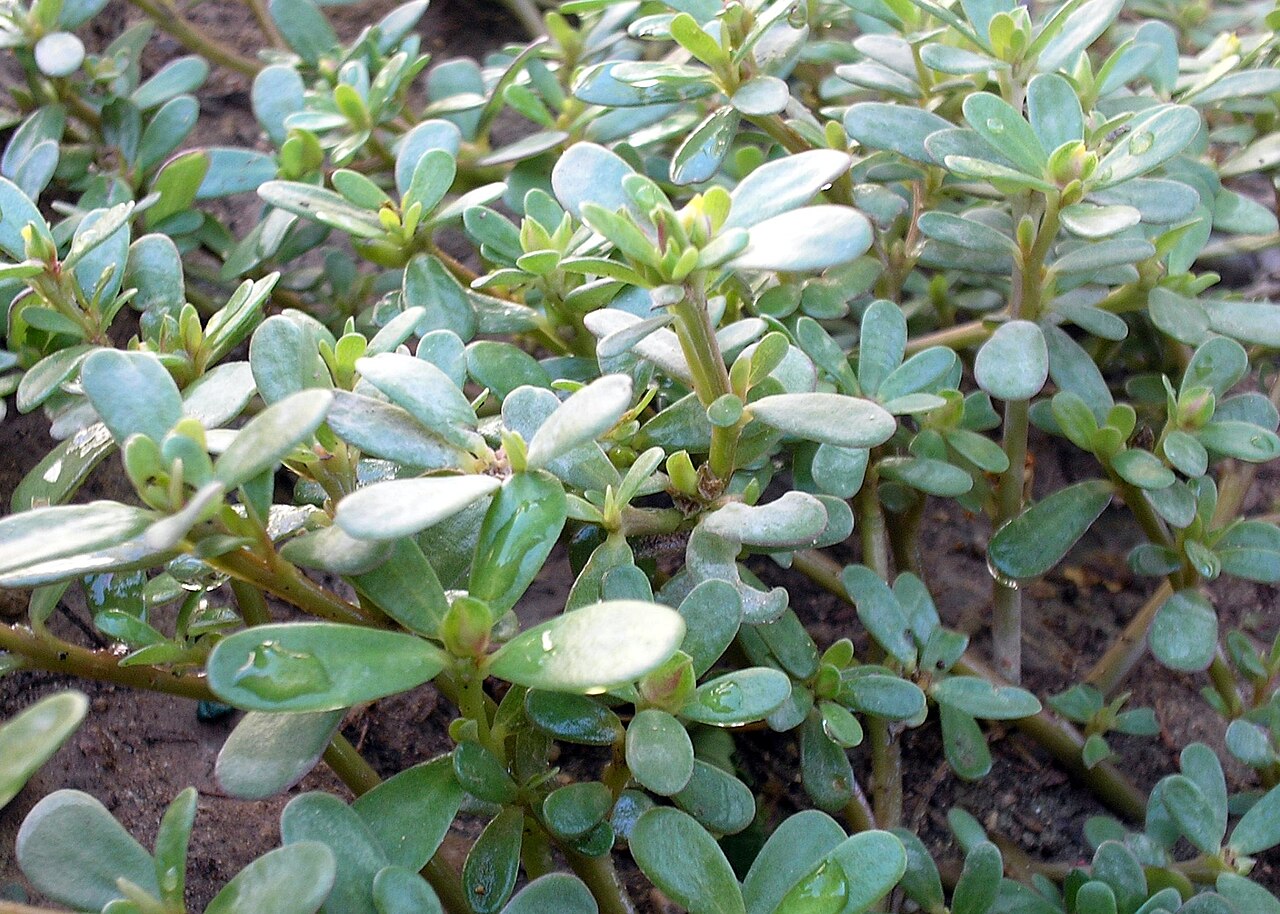
ⓒ
Photo: ZooFari · CC BY-SA 3.0 · Original file (Wikimedia Commons)
Purslane, pulled out as a weed from Korean fields and roadsides, is actually a salad ingredient in the West. Its plump leaves are crunchy like cucumber, sour like lemon and slightly salty.
Please read before eating. This herb needs some care. See cautions
Flavor and aroma
- It has a slightly sour, salty, lemony taste with a hint of peppery sharpness.
- Raw, it's crunchy like cucumber. Cooked, it releases a sticky mucilage that thickens soups.
Fun facts
- In the US it's treated as a weed, but in Europe, the Middle East, Asia and Mexico it's eaten as a vegetable. Its Mexican name is verdolaga.
- Records show it's among the leafy greens highest in omega-3 fatty acids (alpha-linolenic acid).
- It has been eaten from Italy to China for thousands of years.
In the kitchen
Raw
- Add it to salads, cucumber salads and tacos. The stems, leaves and flower buds are all edible.
Cooking
- Blanch or sauté it like spinach. Added to soups, it thickens them.
Sauces
- Make it into pesto.
Pickling
- Make it into pickles.
Goes well with
CucumberYogurtCheeseNutsOlivesGarlicRadishAnchoviesSeafoodCitrus
Tips
- Remove thick, tough stems before using.
Season
We're still checking the season. We'll add it once we find a source.
Details
- Korean name
- 쇠비름
- English names
- purslane
- Scientific name
- Portulaca oleracea
- Family
- Portulacaceae
- Genus
- Portulaca
- Other names and notes
- Korean: soebireum
Cautions
It's high in oxalates (up to about 910mg in half a cup of raw leaves). Boiling or pickling reduces them. If you have kidney stones, eat it in moderation. The seeds contain more, so remove them.
Show sources for this page
References for this herb
- Wikipedia
- NC State Extension
- University of Arizona Extension
- Specialty Produce
- 미국 환경보호청 HERO 데이터베이스(쇠비름 옥살산 연구)
Name and classification
Photo
ZooFari · CC BY-SA 3.0 · Original file (Wikimedia Commons)