Lovage
러비지
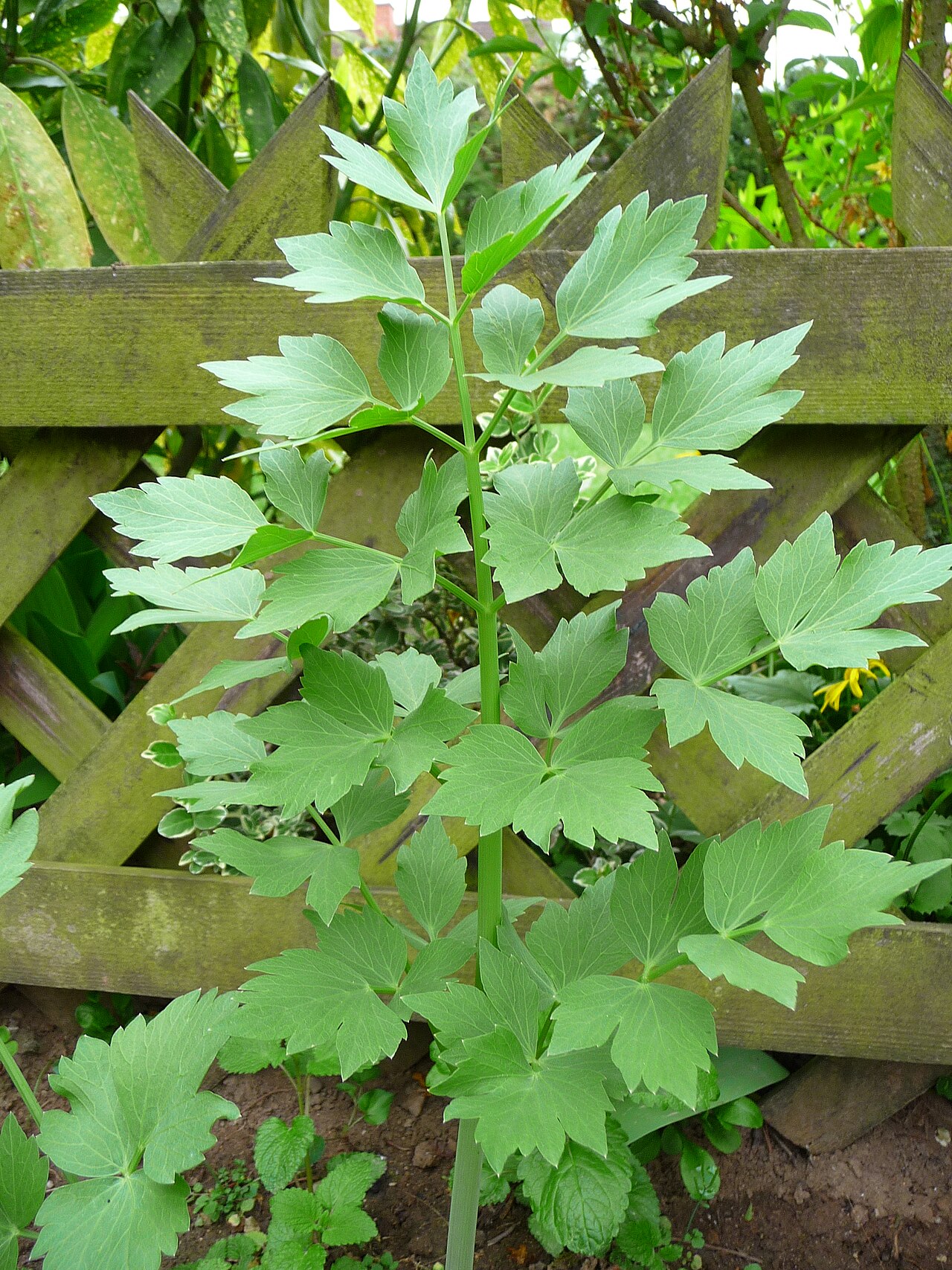
ⓒ
Photo: 4028mdk09 · CC BY-SA 3.0 · Original file (Wikimedia Commons)
It tastes like celery made several times stronger. Just a few leaves fill a whole pot with celery aroma. In Germany it's called "Maggi herb" because its taste resembles Maggi seasoning.
Flavor and aroma
- It's similar to celery but much stronger and sweeter, with a hint of parsley.
Fun facts
- In Germany and Austria it's called Maggikraut (Maggi herb).
- It's the only species in the genus Levisticum.
- The English name is said to come from a name from the Liguria region of Italy.
- It's an herb used since ancient Roman times.
In the kitchen
Raw
- Add young leaves to summer salads.
Cooking
- Use it instead of celery in soups, stews, stocks, sauces and roasts. The aroma survives long cooking.
- It goes especially well with potato dishes, chicken and pork. Add it to lamb soups and stews too.
Seeds
- Use the seeds like celery salt in bread, soups and cheese dishes, or in pickling liquid and salad dressings.
Goes well with
PotatoChickenPorkLambLentils
Tips
- Young leaves are the sweetest; older leaves are bitter. Too much tastes medicinal, so add a little at a time. It keeps a long time when dried.
Season
We're still checking the season. We'll add it once we find a source.
Details
- Korean name
- 러비지
- English names
- lovage, love parsley
- Scientific name
- Levisticum officinale
- Family
- Apiaceae
- Genus
- Levisticum
Show sources for this page
References for this herb
- University of Illinois Extension
- Herb Society of America
- Montréal Botanical Garden
- Forager Chef
- Kotányi
Name and classification
Photo
4028mdk09 · CC BY-SA 3.0 · Original file (Wikimedia Commons)