Summer savory
서머 세이버리
ⓒ
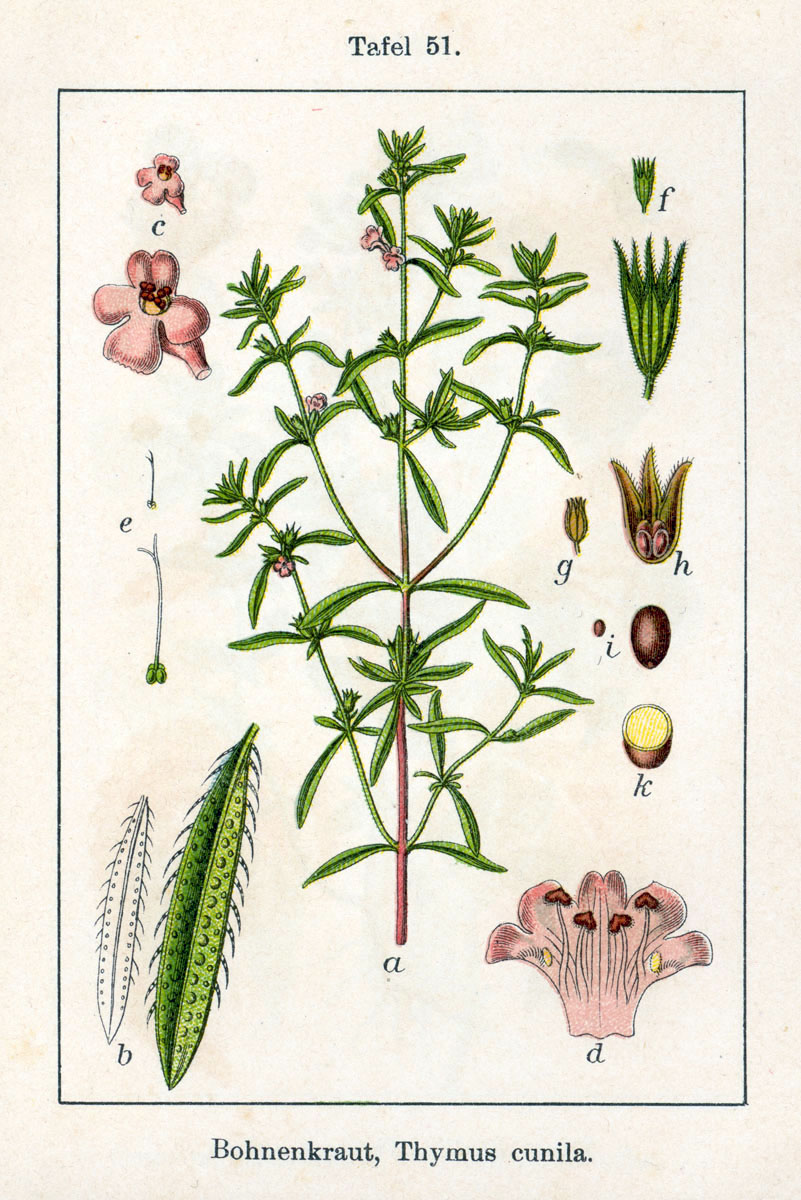
Photo: Johann Georg Sturm (Painter: Jacob Sturm) · Public domain · Original file (Wikimedia Commons)
In Germany it's called the "bean herb" (Bohnenkraut). There's a saying that adding it to beans brings them to life and turns a bean salad into something special. It's peppery, with a thyme-like aroma.
Flavor and aroma
- It's peppery, with an aroma like a mix of thyme, marjoram and mint.
- It's a little sharper than thyme but not as strong as sage.
Fun facts
- The German name Bohnenkraut means "bean herb."
- Folklore It's said to reduce gas after eating beans, so it has been added to bean dishes.
- It's an herb used since ancient Roman times.
- It's milder than winter savory (Satureja montana).
In the kitchen
Cooking
- Add it to meat dishes and salads.
Bean dishes
- Add it to green beans, bean salads, peas and lentils.
Seasoning
- It blends well with parsley, marjoram, oregano, basil, rosemary and thyme.
Garnish
- The flowers are edible too.
Goes well with
BeansGreen beansPeasPotatoMeat
Season
We're still checking the season. We'll add it once we find a source.
Details
- Korean name
- 서머 세이버리
- English names
- summer savory
- Scientific name
- Satureja hortensis
- Family
- Lamiaceae
- Genus
- Satureja
- Other names and notes
- German: Bohnenkraut
Show sources for this page
References for this herb
- Herb Society of America
- Montréal Botanical Garden
- Sunset Magazine
- Specialty Produce
- Old Farmer's Almanac
Name and classification
Photo
Johann Georg Sturm (Painter: Jacob Sturm) · Public domain · Original file (Wikimedia Commons)