Holy basil
홀리 바질
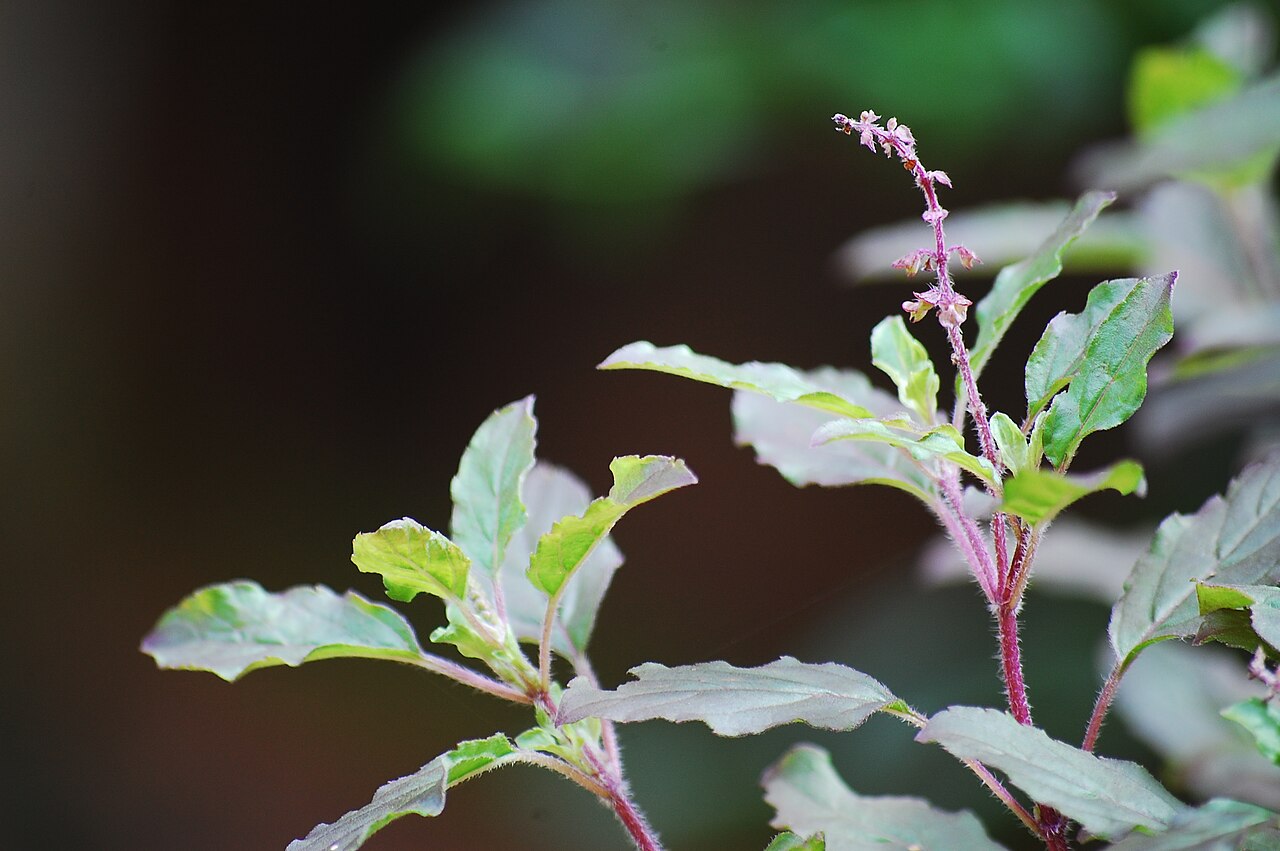
ⓒ
Photo: Challiyan at Malayalam Wikipedia · CC BY-SA 2.5 · Original file (Wikimedia Commons)
The real star of pad kra pao (basil stir-fry with rice), a Thai street food. Unlike the basil we know, it has a sharp, spicy aroma like cloves. In India it's considered a sacred plant.
Flavor and aroma
- It's peppery, with clove, camphor and mint aromas.
- The more it's cooked, the stronger the aroma.
Fun facts
- The clove aroma comes from a compound called eugenol.
- In Thailand, the spicier "red" holy basil and the "white" holy basil used for seafood are used separately.
- In India it's called tulsi and is considered sacred in Hinduism.
- It's a different species from Thai basil, which smells of licorice.
In the kitchen
Cooking
- Add it to Thai curries, soups and noodle dishes. It's also used in gulai, a fish curry from the Minangkabau region of Indonesia.
Stir-fries
- For pad kra pao, stir-fry chicken, pork, beef or seafood and add a handful of leaves at the very last moment.
Other ideas
- Infuse it in honey or ghee (clarified butter), or drink it as tea.
Goes well with
GarlicChiliFish sauceOyster sauceChickenPorkFried egg
Tips
- Used instead of regular basil, it makes a dish much spicier, so adjust the amount.
Season
We're still checking the season. We'll add it once we find a source.
Details
- Korean name
- 홀리 바질
- English names
- holy basil, tulsi
- Scientific name
- Ocimum tenuiflorum
- Former scientific names
- Ocimum sanctum
- Family
- Lamiaceae
- Genus
- Ocimum
- Other names and notes
- Thai: kaphrao
Show sources for this page
References for this herb
- Wikipedia
- Britannica
- Specialty Produce
Name and classification
Photo
Challiyan at Malayalam Wikipedia · CC BY-SA 2.5 · Original file (Wikimedia Commons)