Wild garlic
야생 마늘 / 램슨
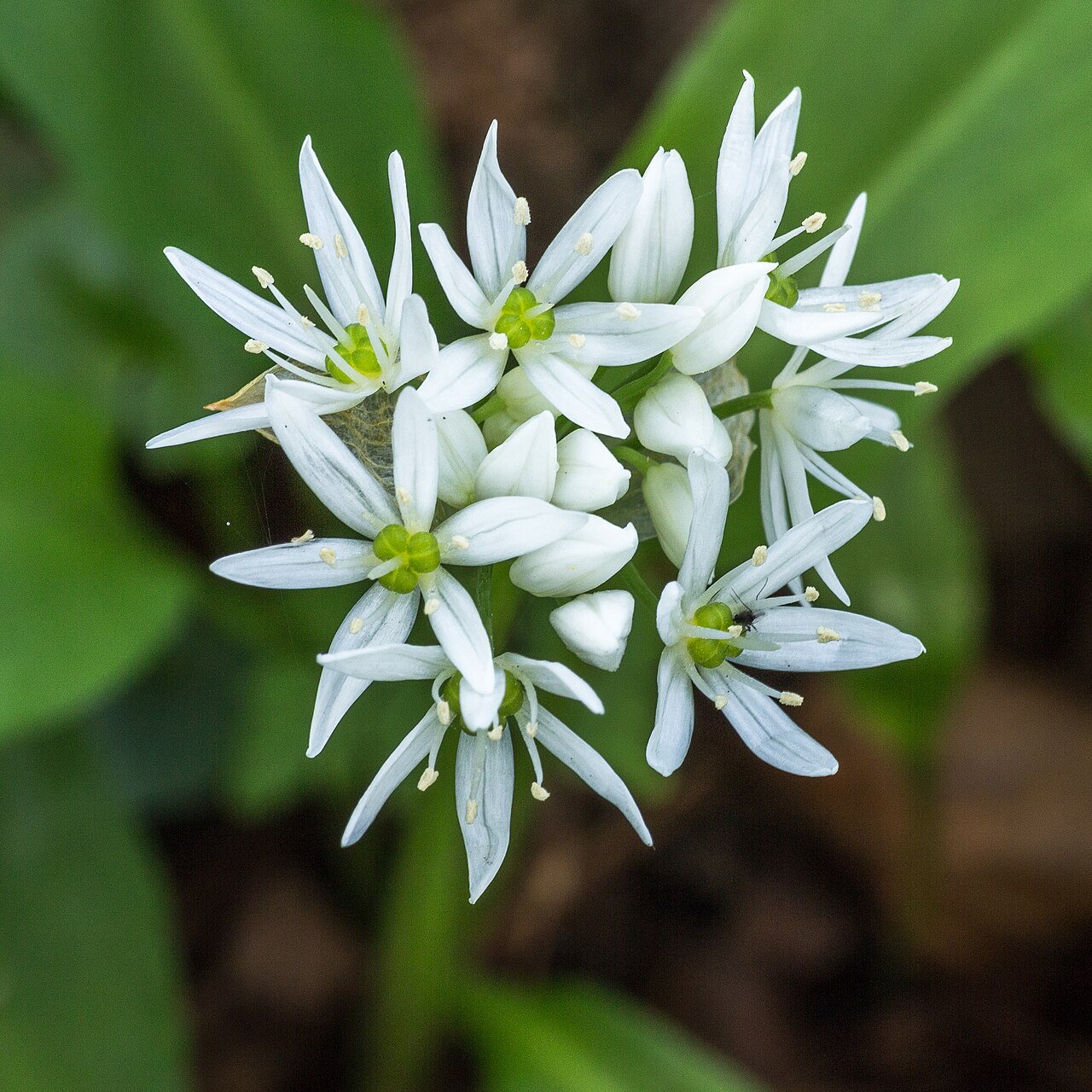
ⓒ
Photo: Agnes Monkelbaan · CC BY-SA 4.0 · Original file (Wikimedia Commons)
In spring, these leaves carpet the floor of European forests like a green rug. Rub a leaf and it smells strongly of garlic, but it's softer and fresher than garlic. Noma, the Danish restaurant, even makes capers from this plant.
Please read before eating. This herb needs some care. See cautions
Flavor and aroma
- It has a soft garlic taste and a chive-like aroma. It's milder than cultivated garlic.
Fun facts
- The scientific name ursinum means "of bears." In English it's also called "bear's garlic."
- Folklore There's a story that bears look for these leaves when they wake from hibernation.
- Noma's preserving recipe book includes "salted ramson capers."
In the kitchen
Cooking
- Add it at the end to soups, gnocchi, potato dishes and egg dishes.
Sauces
- Make pesto with wild garlic leaves instead of basil (with pine nuts, Parmesan, olive oil and lemon juice).
Other ideas
- Steep the leaves in olive oil to make flavored oil, or mix chopped leaves into butter for herb butter. Stir it into cream cheese or quark too.
Preserving
- Salt-cure it to use like capers.
Goes well with
PotatoEggsButterCream cheesePastaPine nuts
Tips
- Long cooking weakens the aroma, so add it at the end. No peeling needed; just wash the leaves and stems and use them.
Season
We're still checking the season. We'll add it once we find a source.
Details
- Korean name
- 야생 마늘 / 램슨
- English names
- wild garlic, ramsons, bear's garlic
- Scientific name
- Allium ursinum
- Family
- Amaryllidaceae
Formerly classified in the lily family (Liliaceae) - Genus
- Allium
Cautions
Its young leaves look very similar to poisonous lily of the valley and autumn crocus (Colchicum). In Europe, poisonings from picking the wrong plant happen again and again, including deaths (German Federal Institute for Risk Assessment). Don't forage it yourself; buy it from a trusted seller. If your hands already smell of garlic, telling them apart by smell can also fail.
Show sources for this page
References for this herb
- 독일 연방위해평가원(BfR)
- Woodland Trust
- 베를린 자연사박물관 Naturblick
- Foraging Course Company
- The Noma Guide to Building Flavour(목차)
Name and classification
Photo
Agnes Monkelbaan · CC BY-SA 4.0 · Original file (Wikimedia Commons)