Elderflower
엘더플라워
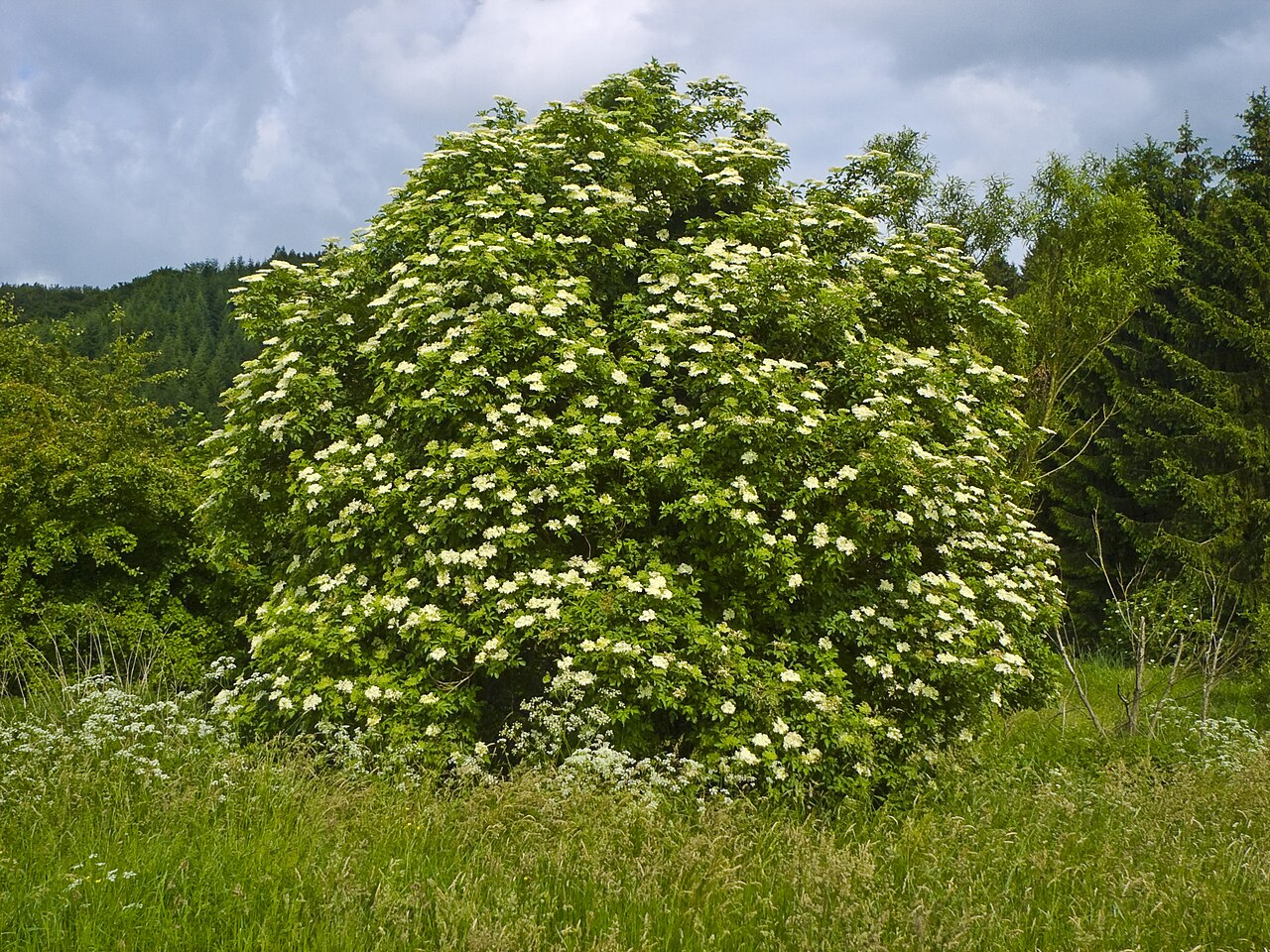
ⓒ
Photo: Willow · CC BY 2.5 · Original file (Wikimedia Commons)
Its white flower clusters have a sweet scent like muscat grapes and vanilla. In Europe, a syrup drink made from these flowers is a symbol of summer. Korean mountains are home to a relative from the same group, the Korean elder (ttakchong-namu).
Please read before eating. This herb needs some care. See cautions
Flavor and aroma
- It smells of muscat grapes, vanilla and flowers.
- It's slightly bitter, with sweetness like passion fruit, pear and citrus.
Fun facts
- The French liqueur St-Germain is made from elderflowers.
- In Sweden there's also aquavit flavored with elderflower.
- Korea also has elders from the same genus, Sambucus.
In the kitchen
Drinks
- Steep the flowers with sugar, lemon and water to make cordial (flower syrup). Mix it with water or add a few drops to dry white wine.
Desserts
- Use it in fruit-and-cream desserts with gooseberries, raspberries, rhubarb and peaches.
Fritters
- Dip flower clusters in light batter and fry until crisp.
Pickling
- Pickle green flower buds before they open, like capers.
Other ideas
- Make elderflower "champagne" (a fermented drink), marmalade and macarons.
Goes well with
GooseberryRaspberryRhubarbPeachPearLemonWhite wine
Tips
- When making uncooked syrup, pick only the flowers off the stems.
Season
We're still checking the season. We'll add it once we find a source.
Details
- Korean name
- 엘더플라워
- English names
- elderflower, black elder
- Scientific name
- Sambucus nigra
- Family
- Viburnaceae
Former family name Adoxaceae. Viburnaceae according to Plants of the World Online - Genus
- Sambucus
Cautions
Only the flowers and fully ripe, cooked berries are edible. The leaves, stems, bark, roots and unripe or raw berries contain cyanogenic glycosides, which can cause nausea, vomiting and diarrhea. In 1983 in the US, 25 people fell ill after drinking juice pressed from raw berries along with leaves and stems.
Show sources for this page
References for this herb
- Woodland Trust
- Wikipedia
- WebMD
- Compound Interest
- Specialty Produce
Name and classification
Photo
Willow · CC BY 2.5 · Original file (Wikimedia Commons)