Myoga
양하
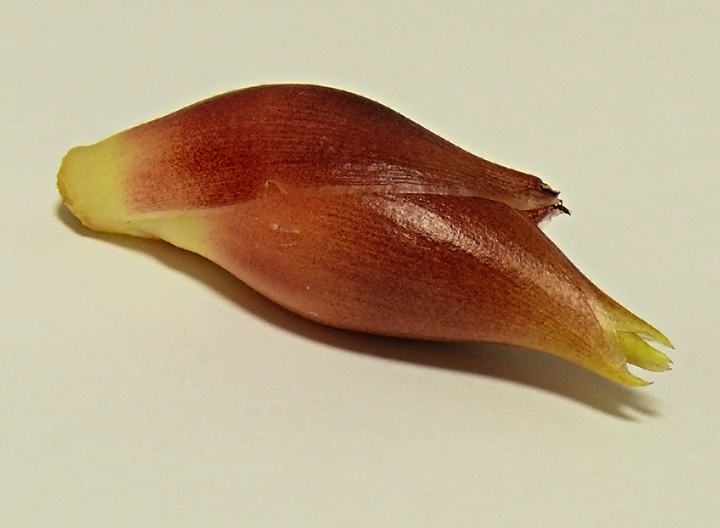
ⓒ
Photo: Mariko GODA · CC BY-SA 3.0 · Original file (Wikimedia Commons)
A relative of ginger, but instead of the root you eat the pinkish flower buds that rise from the ground. It's crunchy and fresh, with an aroma like a mix of ginger and green onion. In Korean cooking, myoga is sometimes threaded on skewers alternating with meat and pan-fried.
Flavor and aroma
- It has a gentle ginger aroma, a floral note, and a fresh, sharp taste.
- Like green onion, it has a slightly oniony aroma.
Fun facts
- It's the most cold-hardy species in the ginger family.
- It's in the same genus as ginger, but its rhizome isn't eaten.
- In Japan it's a popular summer seasoning, with about 9,000 tons of flower buds produced a year.
- It comes from Japan, China and the southern Korean Peninsula.
In the kitchen
Cooking
- Thread it on skewers alternating with meat and pan-fry.
Garnish
- Shred it very finely over miso soup, Japanese vinegared salads (sunomono), grilled eggplant, chilled tofu, and cold soba or somen.
Fritters
- Make it into tempura.
Pickling
- Pickle it in rice vinegar and mirin, or make sweet vinegar pickles (amazuzuke) to serve with sushi.
Goes well with
MisoTofuEggplantSomenKatsuobushiFish
Tips
- Use it wherever you'd put sliced green onion. Use the buds before they flower.
Season
We're still checking the season. We'll add it once we find a source.
Details
- Korean name
- 양하
- English names
- myoga, Japanese ginger
- Scientific name
- Zingiber mioga
- Family
- Zingiberaceae
- Genus
- Zingiber
- Other names and notes
- Korean: yangha
Show sources for this page
References for this herb
- Wikipedia
- Specialty Produce
- Just One Cookbook
- Plant Delights Nursery
- Atlas Obscura
Name and classification
Photo
Mariko GODA · CC BY-SA 3.0 · Original file (Wikimedia Commons)