Indian bay leaf
인도 월계수잎 / 테즈파타
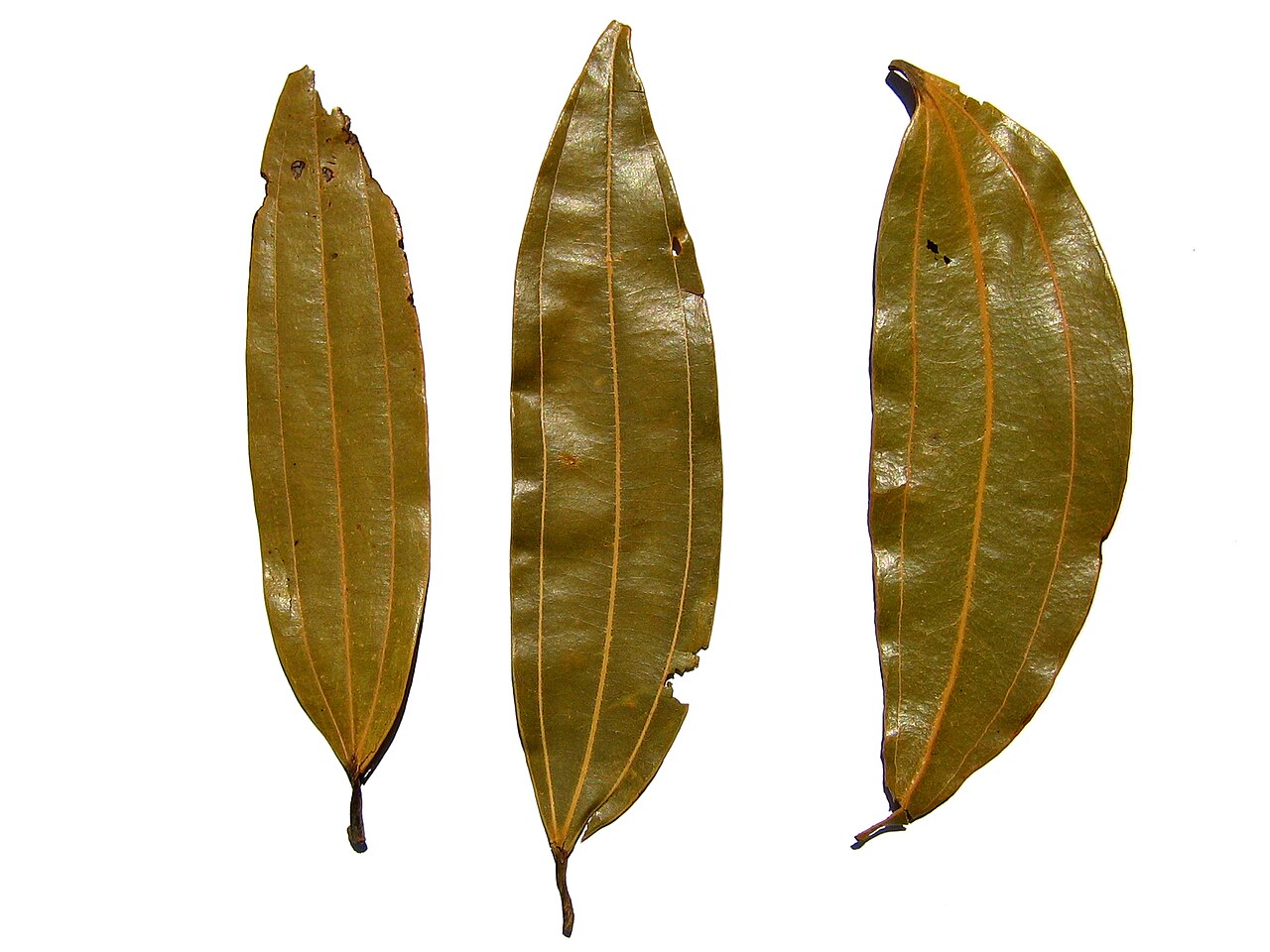
ⓒ
Photo: Sonja Pauen · Public domain · Original file (Wikimedia Commons)
It's called a bay leaf, but it's actually the leaf of a relative of the cinnamon tree. So instead of a bay aroma, it smells of cinnamon and cloves. The fragrance of Indian biryani comes from this leaf.
Flavor and aroma
- It has a sweet, warm aroma like a mix of cinnamon (cassia) and cloves.
- It's completely different from the Mediterranean bay leaf (which smells of pine and lemon).
Fun facts
- Its leaves have three thick veins running lengthwise, so it's easy to tell apart from an ordinary bay leaf (one vein).
- It's in the laurel family, like bay laurel, but a different genus.
- The Hindi name tejpatta means "pungent leaf." Its old name is malabathrum.
In the kitchen
Cooking
- Add it to curries, dal (lentil dishes) and Mughal dishes.
Rice
- Add whole leaves to biryani and pulao and remove them before eating.
Other ideas
- Ground, it's more aromatic than whole leaves.
Goes well with
RiceLentilsCardamomClovesCinnamonGhee
Tips
- If you can't find it, use a little cinnamon and one clove instead. Swapping in a Mediterranean bay leaf changes the taste.
Season
We're still checking the season. We'll add it once we find a source.
Details
- Korean name
- 인도 월계수잎 / 테즈파타
- English names
- Indian bay leaf, tejpat
- Scientific name
- Cinnamomum tamala
- Family
- Lauraceae
- Genus
- Cinnamomum
- Other names and notes
- Hindi: tej patta
Show sources for this page
References for this herb
- Wikipedia
- ICAR 인도 향신료연구소
- Atlas Obscura
- Encyclopedia of Life
Name and classification
Photo
Sonja Pauen · Public domain · Original file (Wikimedia Commons)