Rue
루
ⓒ
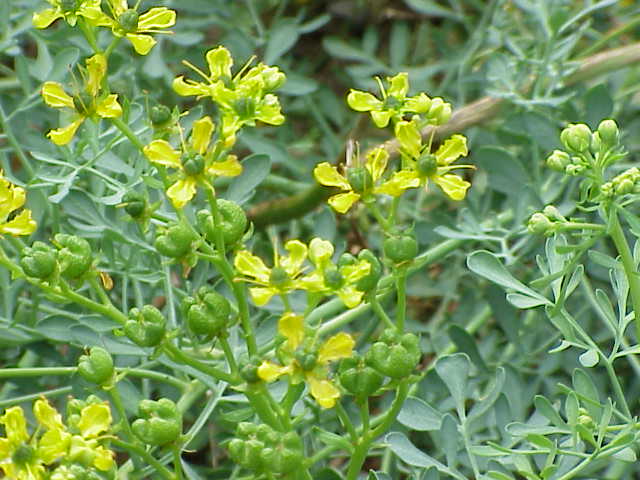
Photo: Kurt Stüber [1] · CC BY-SA 3.0 · Original file (Wikimedia Commons)
A very bitter herb that was widely used in ancient Roman cooking but is now almost forgotten. In Italy its branches are put in grappa (grape brandy) for flavor, and in Ethiopia it's steeped in coffee.
Please read before eating. This herb needs some care. See cautions
Flavor and aroma
- It has a strong, sharp bitterness, with a sweet citrus aroma underneath.
Fun facts
- It's in the same family as citrus trees (Rutaceae).
- The scientific name graveolens means "strong-smelling."
- The English word rue is the same as the word meaning "to regret," so it has long been used as a symbol of regret.
- It's mentioned together with mint in the Bible, Luke 11:42.
- The rue used in Ethiopia is a different species in the same genus (Ruta chalepensis).
In the kitchen
Drinks
- In Ethiopia, fresh rue sprigs are dipped in coffee for a citrus aroma.
Alcohol
- Grappa alla ruta from northern Italy and Istria in Croatia has a rue branch inside the bottle.
Cooking
- Add about one leaf to egg, cheese or fish dishes. Dip it in stock or sauce for just a few minutes and remove it; the bitterness drops and the citrus aroma remains.
Seasoning
- It's an ingredient in berbere, an Ethiopian spice blend.
Goes well with
EggsCheeseFishCoffeePlumWine
Tips
- Use very little, one leaf at a time.
Season
We're still checking the season. We'll add it once we find a source.
Details
- Korean name
- 루
- English names
- rue, herb-of-grace
- Scientific name
- Ruta graveolens
- Family
- Rutaceae
- Genus
- Ruta
Cautions
It can harm the liver in large amounts. Never eat it during pregnancy (risk of miscarriage). If the leaves touch your skin and then get sunlight, blisters like burns can form, so be careful handling it bare-handed. People with heart or kidney disease or taking blood pressure medication should avoid it.
Show sources for this page
References for this herb
- Britannica
- Wikipedia
- Specialty Produce
- 텍사스대 엘패소(UTEP) 허브 안전 정보
- IPCS INCHEM
Name and classification
Photo
Kurt Stüber [1] · CC BY-SA 3.0 · Original file (Wikimedia Commons)