Mitsuba
미쓰바 / 파드득나물
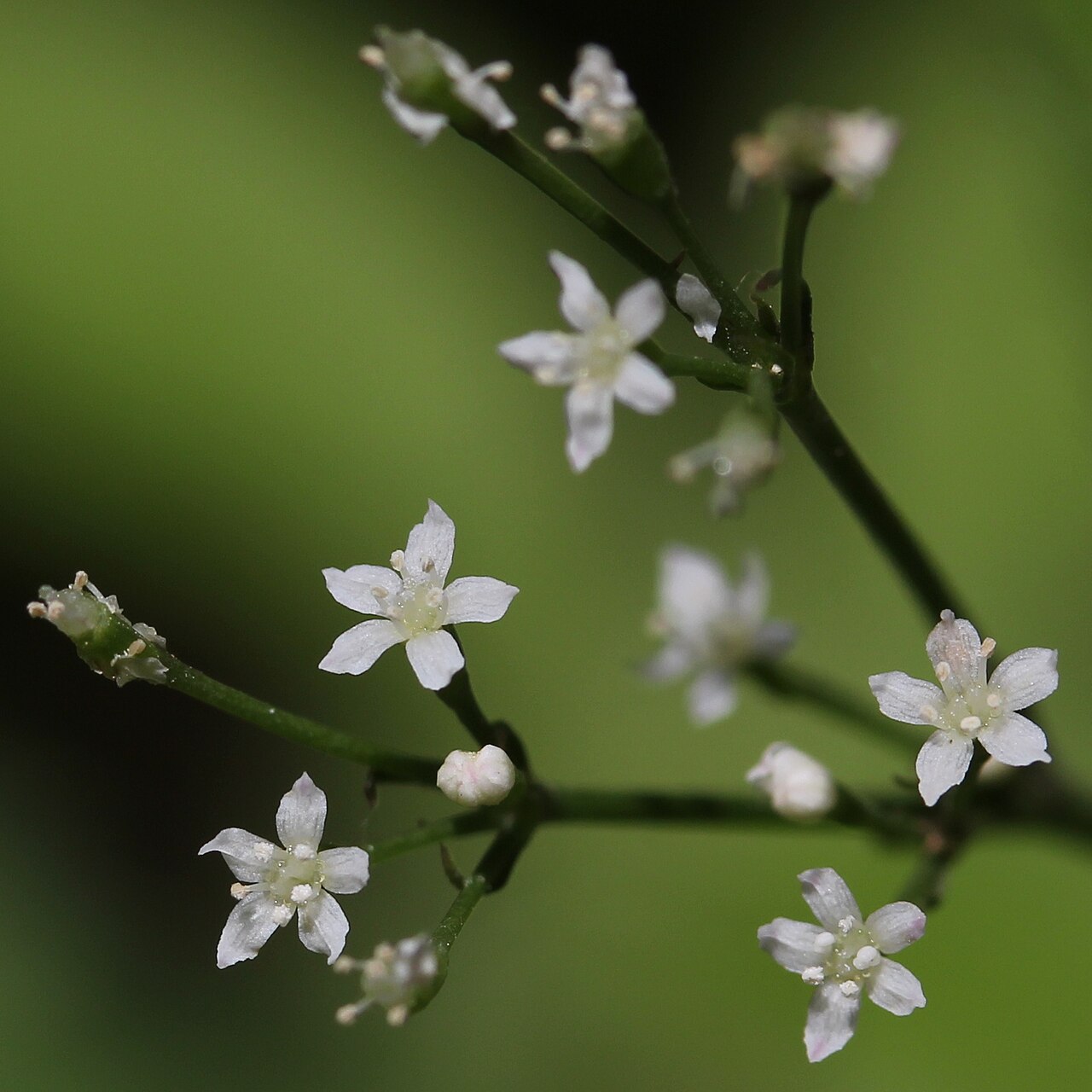
ⓒ
Photo: Alpsdake · CC BY-SA 4.0 · Original file (Wikimedia Commons)
Its leaves grow in threes, so in Japanese it's called "three leaves" (mitsuba). It has a refreshing aroma like a mix of celery and parsley, and a sprig always goes on top of Japanese steamed egg custard.
Flavor and aroma
- It has a clean aroma like a mix of celery and parsley, and is slightly bitter.
- It has a hint of shiso, sorrel and cilantro too.
Fun facts
- It's one of Japan's traditional vegetables.
- The roots, stems, leaves, flowers and seeds are all edible.
- The stems are sometimes used to tie sushi.
In the kitchen
Raw
- Add the sprouts to salads.
Cooking
- Add it to rice bowls, rolled omelets (tamagoyaki) and sushi rolls.
Garnish
- Put it on Japanese steamed egg custard (chawanmushi) or clear soup (suimono) at the end.
Fritters
- Make tempura with mitsuba grown with its roots.
Goes well with
EggsDashi (stock)TofuMushroomsFish
Tips
- The aroma is delicate, so add it at the end of cooking.
Season
We're still checking the season. We'll add it once we find a source.
Details
- Korean name
- 미쓰바 / 파드득나물
- English names
- mitsuba, Japanese wild parsley
- Scientific name
- Cryptotaenia japonica
- Family
- Apiaceae
- Genus
- Cryptotaenia
- Other names and notes
- Korean: padeudeuk-namul
Cautions
Avoid it if you're allergic to celery or parsley (it's in the same carrot family).
Show sources for this page
References for this herb
- Just One Cookbook
- Specialty Produce
- MasterClass
- Seedaholic
Name and classification
Photo
Alpsdake · CC BY-SA 4.0 · Original file (Wikimedia Commons)