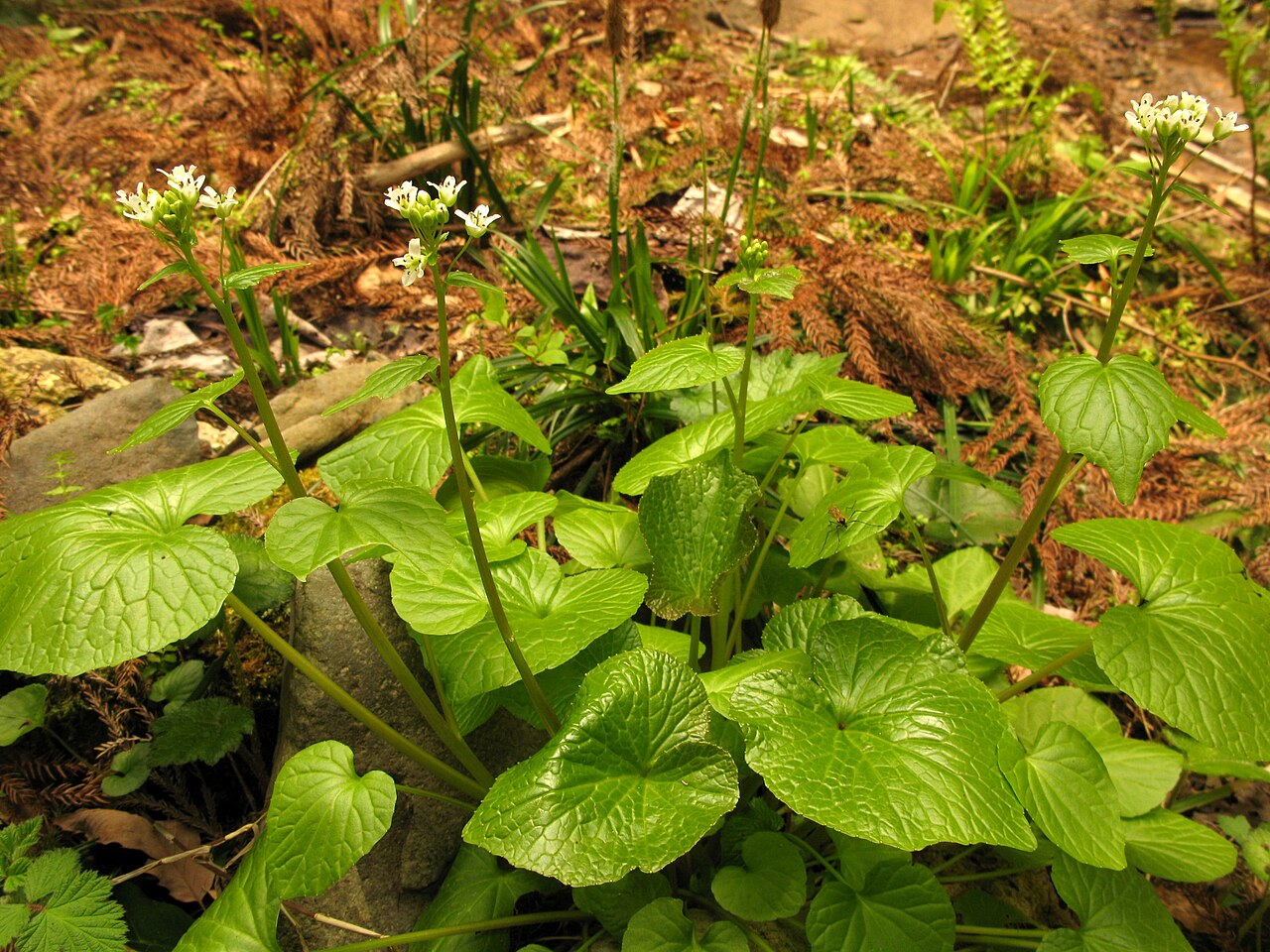
Wasabi leaf & flower
와사비잎과 꽃
ⓒ
Photo: Qwert1234 · CC BY-SA 3.0 · Original file (Wikimedia Commons)
The leaves and flowers of wasabi, the kind served on sushi, are edible too. They're milder than the root but have a sharp kick like mustard greens. Wasabi flowers are a prized ingredient that blooms only briefly in spring.
Flavor and aroma
- It tastes like a mix of spinach and mustard greens, with a gentle sharp heat.
- The flowers are slightly sweet and pungent.
Fun facts
- It's in the cabbage family (Brassicaceae), the same as napa cabbage, mustard and broccoli.
- The use of wasabi in Japan goes back to 794.
- Shizuoka, Japan, is known for wasabizuke, wasabi leaves, stems and flowers pickled in sake lees.
- It grows wild in cold mountain streams in Japan, the Korean Peninsula and eastern Russia.
In the kitchen
Raw
- Add young leaves to salads and sandwiches. Use the flowers as a garnish.
Cooking
- Add the leaves and stems to stir-fries.
Pickling
- Soak the leaves, stems and flowers in brine, then mix them with sake lees to make wasabizuke.
- Pickle the crunchy stems in rice vinegar or soy sauce and put them on sushi, sashimi or white rice.
Goes well with
SashimiWhite riceSoy sauceSake lees
Season
We're still checking the season. We'll add it once we find a source.
Details
- Korean name
- 와사비잎과 꽃
- English names
- wasabi leaf, hana wasabi
- Scientific name
- Eutrema japonicum
- Former scientific names
- Wasabia japonica
- Family
- Brassicaceae
- Genus
- Eutrema
- Other names and notes
- Korean: gochunaengi
Cautions
Eating a lot of raw leaves can cause diarrhea (NC State Extension).
Show sources for this page
References for this herb
- Wikipedia
- NC State Extension
- Specialty Produce
- Herb Society of America
- Macquarie University
- Useful Temperate Plants
Name and classification
Photo
Qwert1234 · CC BY-SA 3.0 · Original file (Wikimedia Commons)