Sea beans
바다 아스파라거스 / 함초
ⓒ
Photo: Marco Schmidt [1] · CC BY-SA 2.5 · Original file (Wikimedia Commons)
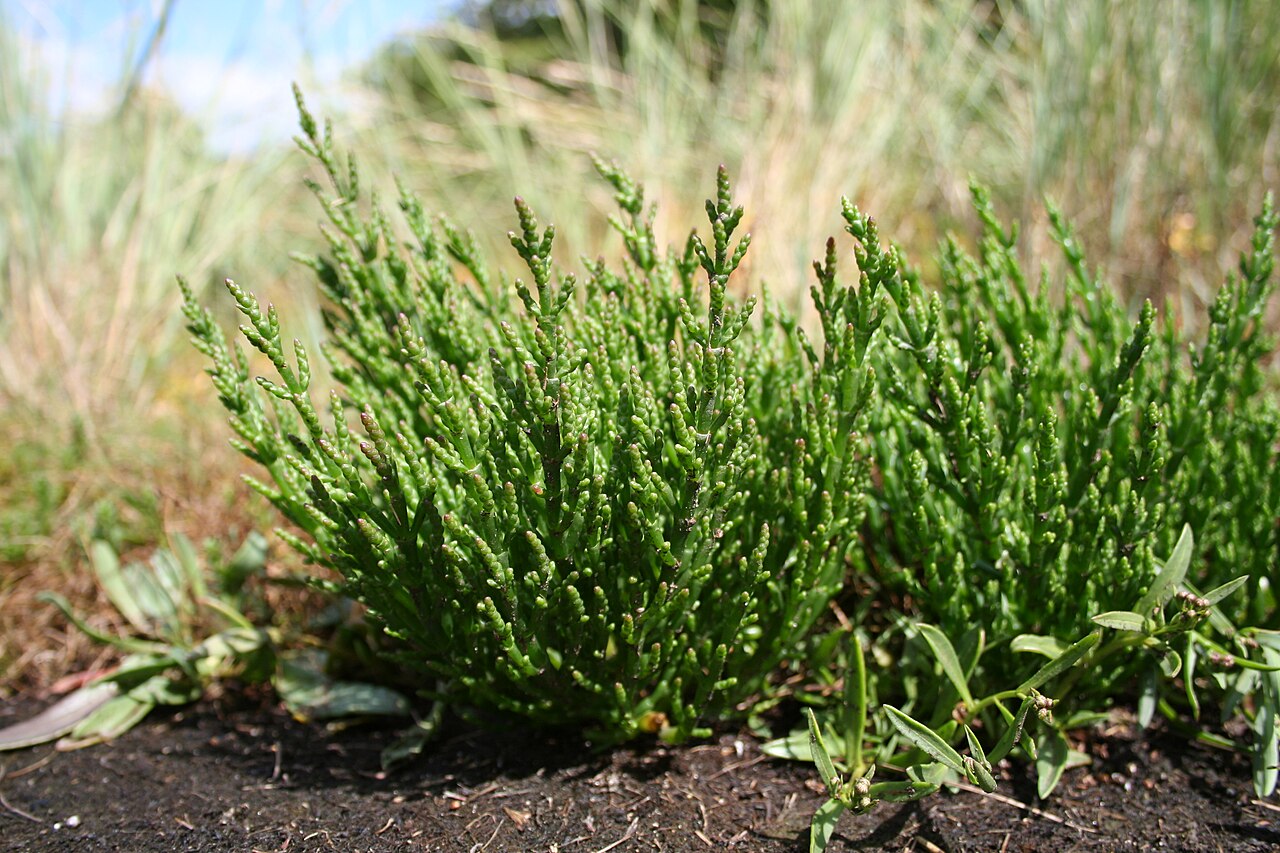
Plump green stems that grow on coastal mudflats. They're crunchy and salty like seawater. It's the same group as the plant known in Korea as hamcho, and Western chefs call it "sea asparagus" and cook with it.
Flavor and aroma
- It tastes salty and of the sea, with a seaweed-like grassy note. There's no fishy smell.
- It's very crunchy. Cooking reduces the saltiness and leaves a taste like green beans or asparagus.
Fun facts
- The genus name Salicornia means "salt horn."
- The salty taste comes from salt absorbed from seawater.
- In Korea it's called hamcho or tungtungmadi. It used to be treated as a useless weed in salt fields.
- It appears on menus as "sea beans" in the US, "marsh samphire" in the UK and "sea asparagus" in Canada.
In the kitchen
Raw
- Add it to salads, grain salads or pasta salads for a salty crunch.
Blanching
- Blanch in boiling water for 30 seconds to 1½ minutes, then plunge into ice water to keep the green color. No need to salt the water.
Sautéing
- After blanching, sauté briefly in butter or olive oil with garlic and lemon juice as a side vegetable.
Seafood dishes
- Use it like a salty herb with oysters, on top of grilled salmon, or with crab and smoked salmon.
Pickles
- Blanch lightly and pickle in vinegar; the saltiness stays. Serve alongside charcuterie, cheese, sausages, ham or salami.
Other ideas
- Dried and ground, it becomes an herb salt to use instead of salt. An Italian chef has used it in mussel and squid-ink ravioli.
Goes well with
OystersSalmonCrabMusselsShrimpLemonGarlicButterCheese
Tips
- It's already salty, so go easy on seasoning. Trim off the tough ends of the stems.
Season
SummerAutumn
Harvest in open fields in Korea: 7–9 (July–September)
Based on hamcho growing on mudflats (open ground) in Korea. The same article also says it can be harvested in spring and autumn when grown in greenhouses.
Details
- Korean name
- 바다 아스파라거스 / 함초
- English names
- sea beans, samphire, glasswort, sea asparagus
- Family
- Amaranthaceae
Formerly classified in the goosefoot family (Chenopodiaceae) - Genus
- Salicornia
A name covering several species in the genus Salicornia. The typical European species is Salicornia europaea - Other names and notes
- Korean: hamcho, tungtungmadi
Show sources for this page
References for this herb
- Specialty Produce
- Fine Dining Lovers
- Hunter Angler Gardener Cook(Hank Shaw)
- Taste Report
- Wikipedia
- 세계일보(함초 기사)
Season
- 농촌진흥청 농사로 - [전남] '함초' 하우스 재배로 연중생산 가능 (전라남도농업기술원, 2013.9.24) — “기존 함초는 바닷물이 들어오는 갯벌에서 4월에 발아하여 7월부터 9월까지 비교적 짧은 기간에만 생산된다”
Photo
Marco Schmidt [1] · CC BY-SA 2.5 · Original file (Wikimedia Commons)