Nasturtium
한련
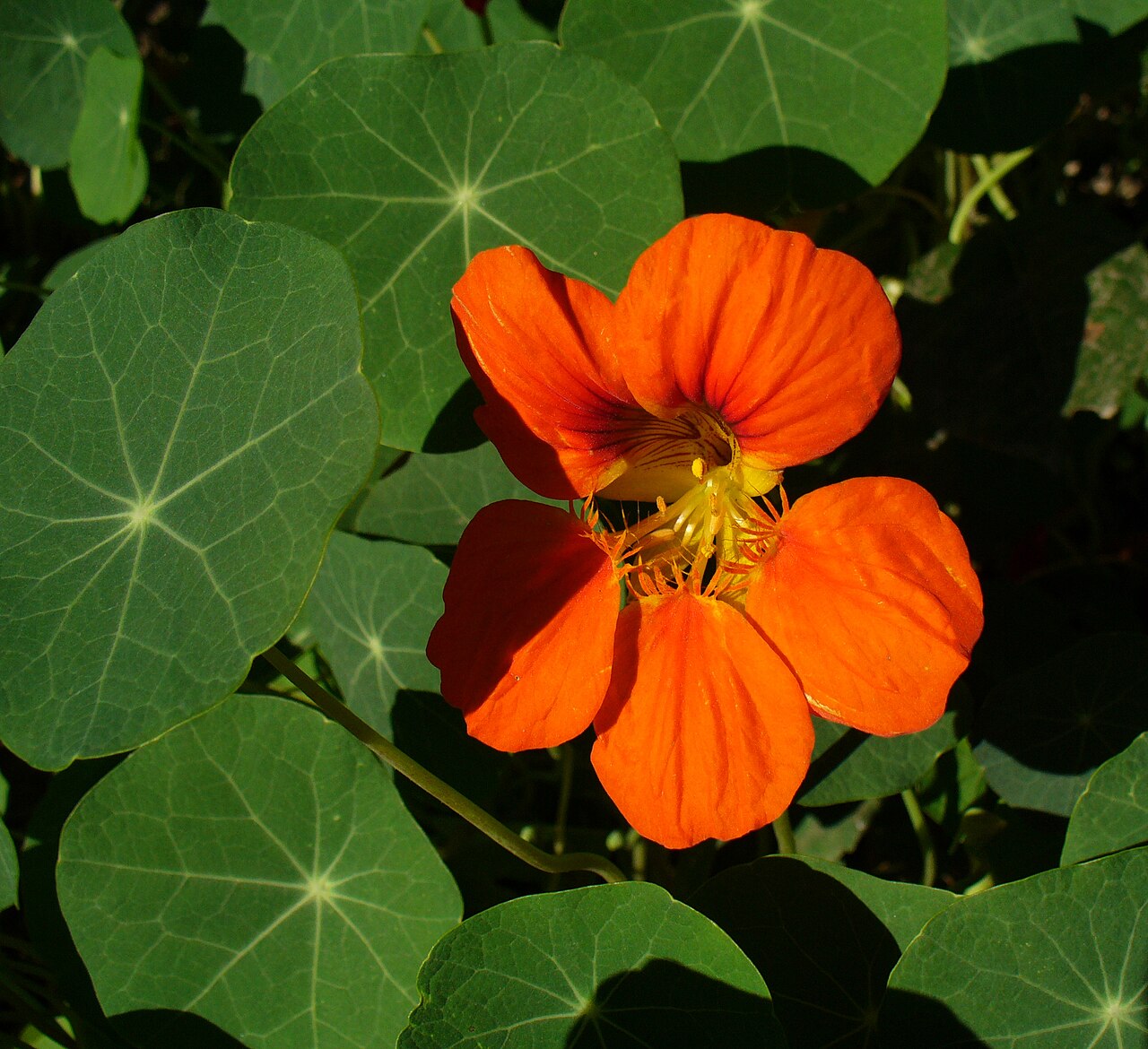
ⓒ
Photo: George Chernilevsky · Public domain · Original file (Wikimedia Commons)
You can eat the round, lotus-like leaves and the orange flowers whole. One bite and a mustard-like heat rises right up your nose. Pickle the unripe seeds in vinegar and they become "poor man's capers."
Flavor and aroma
- The leaves and flowers are peppery and hot like watercress. The flowers are a little sweeter than the leaves.
- The pickled seeds are tangy and sharp with a mustard-like taste, similar to capers.
Fun facts
- There are records of the orange flowers seeming to flash at dusk.
- It was grown at Monticello, the garden of Thomas Jefferson, the third US president, and its seeds are said to have been used as a pepper substitute during World War II.
- Its English name is the same as the genus name of watercress (Nasturtium), but the two plants are unrelated.
- Every part above the ground is edible.
In the kitchen
Raw
- Add the leaves and flowers to salads and potato salad. Use the leaves instead of lettuce in sandwiches. Put the flowers on last, after any sauce or dressing.
Cooking
- Add it to egg dishes, seafood and stir-fries. Make soup or velouté with the leaves and flowers.
Sauces
- Make pesto with the leaves. Blend the leaves into whipped cream to serve with seafood.
Pickles
- Pickle young, firm green seeds in brine and vinegar and use them like capers.
Other ideas
- Grind dried seeds as a pepper substitute, make flower-infused herb vinegar, or decorate cheesecake.
Goes well with
PotatoEggsSeafoodCheese
Tips
- Older leaves are hotter and tougher. It's peppery, so use less pepper in the dish. Pick the seeds while they're light green, before they ripen yellow and harden.
Season
We're still checking the season. We'll add it once we find a source.
Details
- Korean name
- 한련
- English names
- nasturtium, garden nasturtium
- Scientific name
- Tropaeolum majus
- Family
- Tropaeolaceae
- Genus
- Tropaeolum
Show sources for this page
References for this herb
- Wikipedia
- University of Illinois Extension
- Specialty Produce
- Fine Dining Lovers
- Promesse de Fleurs
Name and classification
Photo
George Chernilevsky · Public domain · Original file (Wikimedia Commons)