Oyster leaf
오이스터 리프
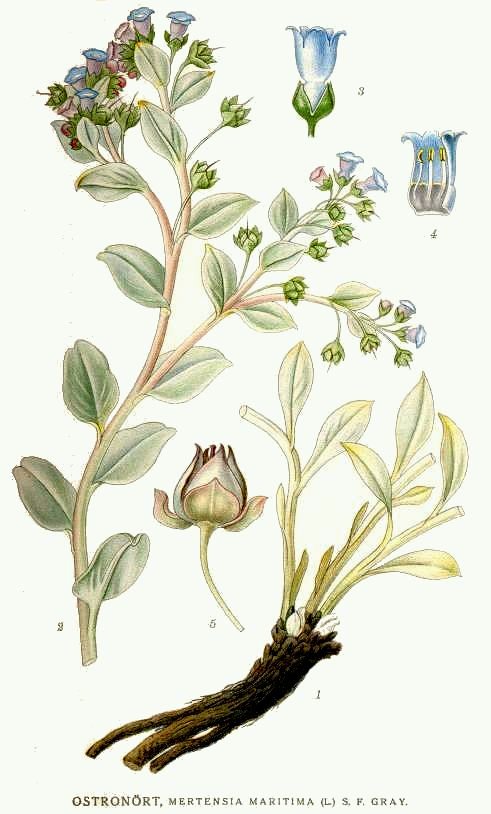
ⓒ
Photo: Carl Axel Magnus Lindman · Public domain · Original file (Wikimedia Commons)
A thick, fleshy leaf that grows on pebbly beaches. One bite and a salty taste of the sea spreads through your mouth, which is why it's called "oysters made of vegetables." Some people say it tastes like oysters, and others say its chewy texture is what resembles them.
Flavor and aroma
- It tastes salty and like the sea, with an aroma that brings oysters to mind.
- The leaves are thick and juicy, slightly sticky and chewy.
Fun facts
- Crushed leaves smell like oysters. Research suggests this comes from a compound called dimethyl sulfide.
- Famous restaurants such as El Bulli in Spain and Noma in Denmark have used it.
- Ferran Adrià, chef of El Bulli, served each leaf with two drops of vinaigrette.
- It grows on northern seashores, as far as Canada and Greenland.
In the kitchen
Raw
- Lay the leaves on crushed ice and add a few drops of vinaigrette. Serve them like real oysters with chilled white wine.
- Top with a spoonful of crème fraîche (a tangy cream) and some caviar for a one-bite dish.
- Use as a garnish on sashimi or sushi, as a side for white fish dishes, or on tacos and tostadas.
Desserts and sauces
- Blended into a sorbet, it has a cool taste that refreshes the palate. Mix it into salad dressing to add a salty note.
Cooking
- Lay the leaves under grilled fish or meat, or scatter them over a stir-fry at the end.
- Chop finely and fold into pasta fillings. Cooking makes the flavor milder.
- A restaurant has served it next to fried oysters, dressed in vinaigrette.
Vegan dishes
- A restaurant has served the leaves on ginger rice yogurt, lychee and frozen mignonette sauce in place of oysters.
Goes well with
Seafood such as shrimp, lobster, crab, salmon and codBasil, mint, dill, parsleyGouda, goat cheese, ricottaGarlicShallotLemon, grapefruitCucumberGingerYuzuSoy saucePonzuGinVodka
Tips
- It tastes best fresh and raw. Kept chilled at 2–7°C, it lasts about 7 days (according to growers).
Season
We're still checking the season. We'll add it once we find a source.
Details
- Korean name
- 오이스터 리프
- English names
- oyster leaf, oyster plant, sea bluebells
- Scientific name
- Mertensia maritima
- Family
- Boraginaceae
- Genus
- Mertensia
Show sources for this page
References for this herb
- Wikipedia(학술지 인용)
- Plants For A Future
- Specialty Produce
- Koppert Cress
- Modern Farmer
- Sonoma Magazine
- Food Ingredients First
Name and classification
Photo
Carl Axel Magnus Lindman · Public domain · Original file (Wikimedia Commons)