Szechuan button
전기 데이지 / 스촨 버튼
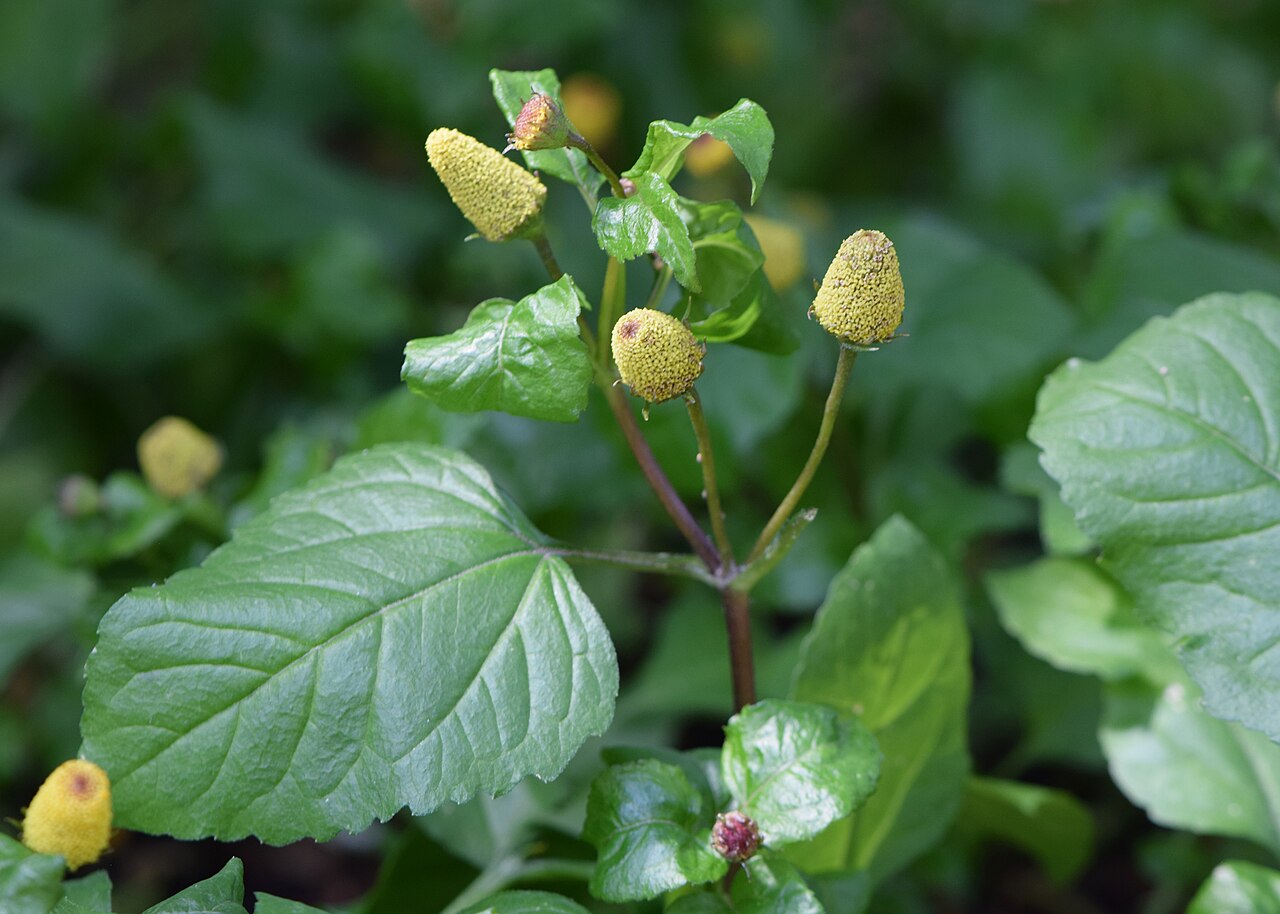
ⓒ
Photo: Krzysztof Ziarnek, Kenraiz · CC BY-SA 4.0 · Original file (Wikimedia Commons)
Chew one of these little yellow flower buds and the tip of your tongue tingles and buzzes, like eating popping candy, and your mouth fills with saliva. The feeling can last up to about 10 minutes.
Flavor and aroma
- At first it tastes grassy, a little citrusy and slightly astringent.
- Soon your mouth goes numb and tingly, and you produce a lot of saliva.
- The more you eat, the stronger and longer it lasts. How strongly people feel it varies.
Fun facts
- The tingling comes from a compound called spilanthol.
- Despite the name "Szechuan," it has nothing to do with Sichuan pepper. The nickname comes from the similar numbing feeling.
- In English it's also called "toothache plant" and "electric daisy."
- Ferran Adrià, a pioneer of molecular gastronomy, experimented with it early on.
In the kitchen
Drinks
- Press flowers onto the rim of a cocktail glass so your lips tingle wherever they touch. The flower needs to be slightly crushed to work.
- A restaurant has served it on a cocktail of vodka, honey syrup and lemon juice. Infuse the flowers in spirits or syrup for cocktails.
Desserts
- Put it on top of sorbet, or use a syrup infused with the flowers in desserts. Ferran Adrià used it on milk wafers (thin crisps).
Cooking
- Mix it into dipping salt, or serve it with sushi and sashimi. A restaurant has served it with yellowtail-type sashimi and avocado.
- Make a salad dressing (vinaigrette) with oil infused with the flowers. The leaves are also added to soups.
Goes well with
SashimiAvocadoHoneyLemonVodka
Tips
- Whole buds are the strongest. Crushed and sprinkled, or thinly sliced in small amounts, they are milder. Light heating doesn't reduce the tingle.
Season
We're still checking the season. We'll add it once we find a source.
Details
- Korean name
- 전기 데이지 / 스촨 버튼
- English names
- Szechuan buttons, buzz buttons, electric daisy, paracress, jambu
- Scientific name
- Acmella oleracea
- Former scientific names
- Spilanthes oleracea
- Family
- Asteraceae
- Genus
- Acmella
Show sources for this page
References for this herb
- Plants of the World Online
- Royal Society of Chemistry
- NPR
- Food Republic
- Specialty Produce
Name and classification
Photo
Krzysztof Ziarnek, Kenraiz · CC BY-SA 4.0 · Original file (Wikimedia Commons)