Pineapple sage
파인애플 세이지
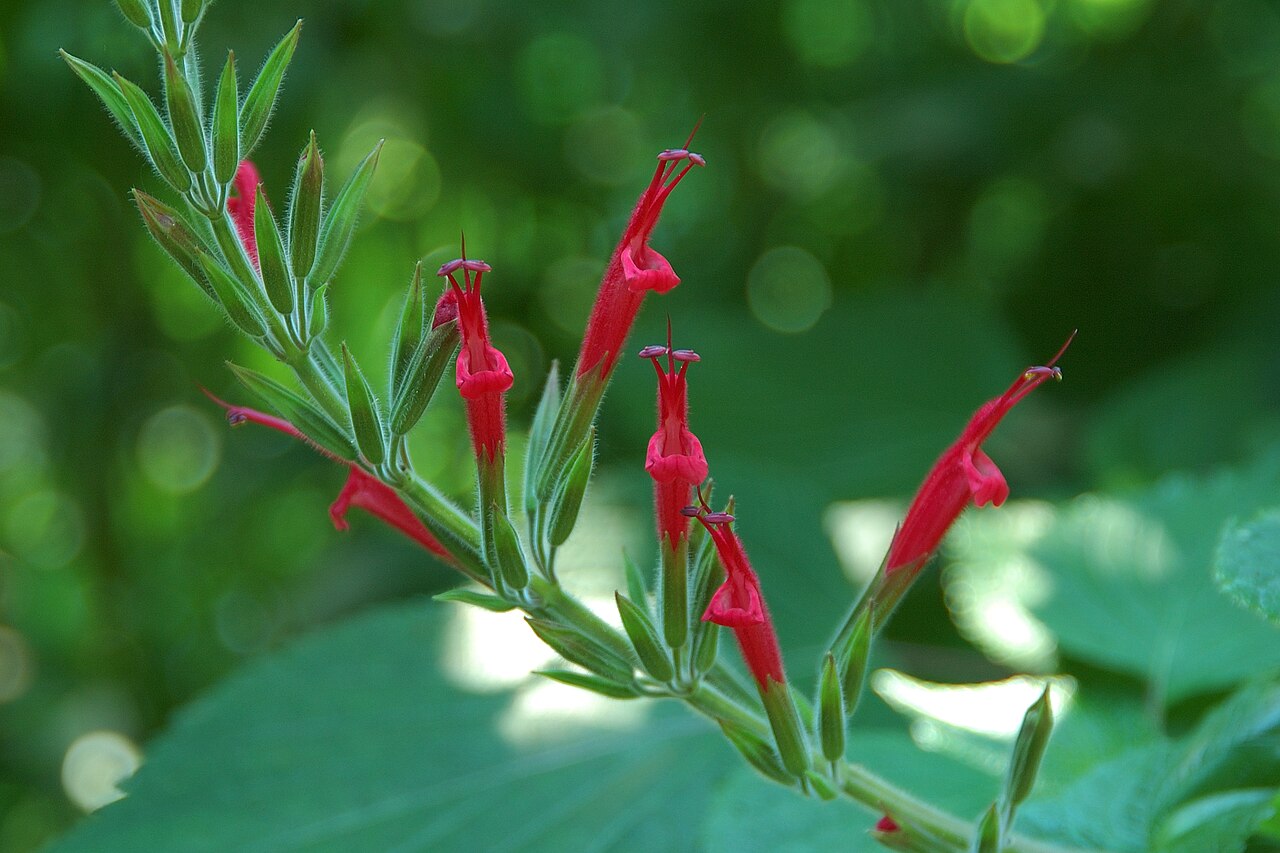
ⓒ
Photo: Eric Hunt · CC BY 2.5 · Original file (Wikimedia Commons)
Rub a leaf gently between your fingers and you get a strong smell of ripe pineapple. The bright red flowers that bloom from late summer into autumn are edible too, with a sweet fruity taste and a hint of mint.
Flavor and aroma
- The leaves smell similar to pineapple.
- The flowers taste sweet and fruity, with a hint of mint and spice.
Fun facts
- It's a plant from Mexico.
- It's one of hummingbirds' favorite flowers, and hummingbirds are its main pollinators.
- It only flowers when the days get shorter, so in cold regions you may not see flowers before the frost.
In the kitchen
Fruit and salads
- Crushed leaves give a fruit salad a pineapple aroma. Scatter flowers over salads too.
Drinks
- Crush a few leaves into hot tea or iced tea. Make herbal tea with fresh or dried leaves and flowers.
- Stick a flowering stem in lemonade or pineapple drinks, or add it to cocktails and smoothies.
Desserts
- Lay fresh leaves under sponge cake batter before baking for a gentle aroma.
- Decorate ice cream, cheesecake and cakes with the red flowers. Chop it into cookies, bread and fruit puddings.
Cooking
- Fresh or dried leaves give savory dishes a sausage-like flavor. Chop it into salsa.
Other ideas
- Steep leaves in honey for a few days, strain, and use on fruit, yogurt or tea (herb honey). Also make herb sugar with the leaves, flower ice cubes and flower vinegar.
Goes well with
Pineapple and other tropical fruitsYogurtHoneyIced teaLemonade
Tips
- Herb sugar and dried leaves turn from green to brownish over time.
Season
We're still checking the season. We'll add it once we find a source.
Details
- Korean name
- 파인애플 세이지
- English names
- pineapple sage
- Scientific name
- Salvia elegans
- Family
- Lamiaceae
- Genus
- Salvia
Show sources for this page
References for this herb
- Wikipedia
- NC State Extension
- University of Wisconsin Master Gardener
- Useful Temperate Plants(Bown, Encyclopaedia of Herbs 인용)
- Richters
- Top Tropicals
Name and classification
Photo
Eric Hunt · CC BY 2.5 · Original file (Wikimedia Commons)