Anise hyssop
아니스 히솝
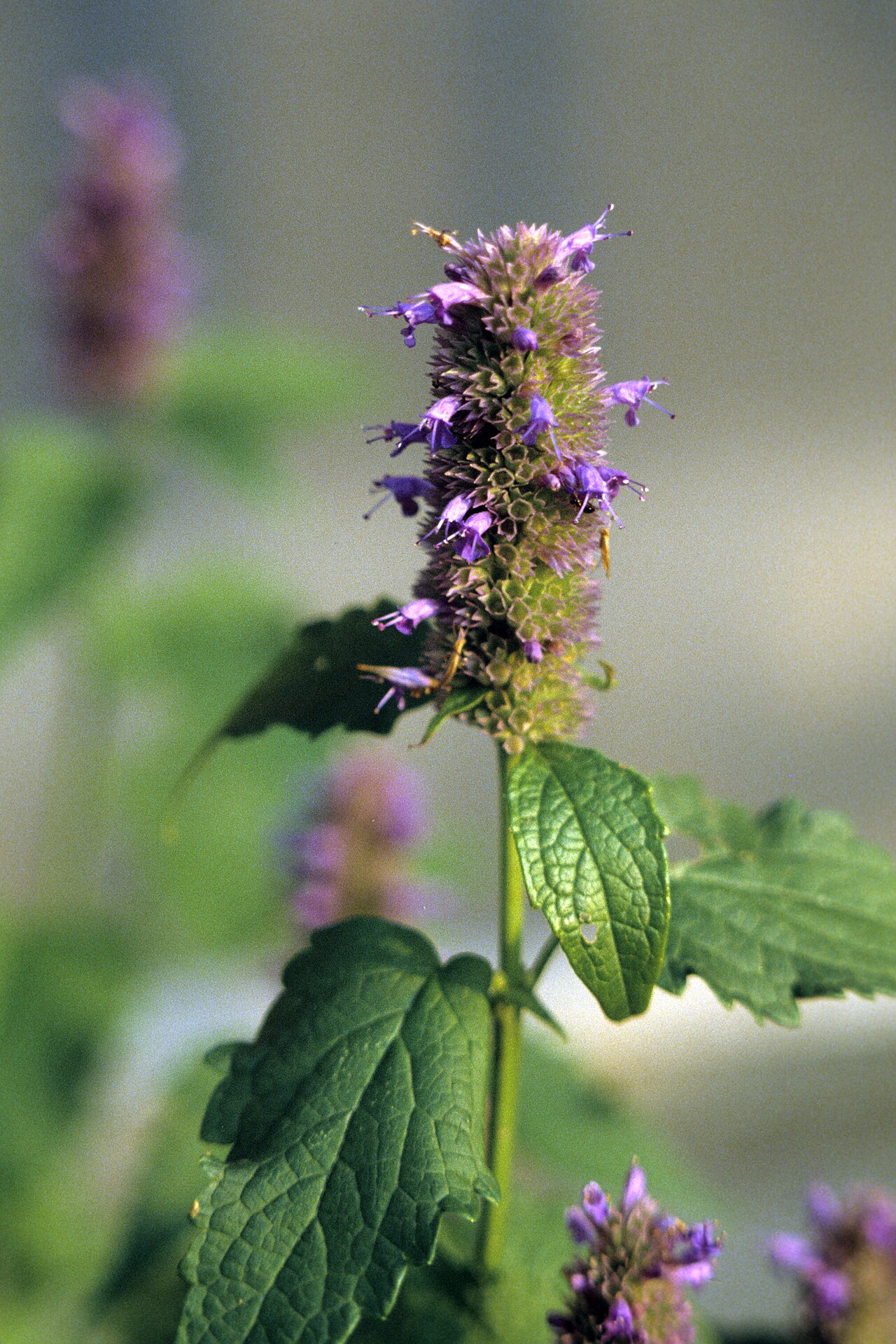
ⓒ
Photo: WayneRay · Public domain · Original file (Wikimedia Commons)
The name may be unfamiliar, but it's a close relative of Korean mint (baechohyang, or bang-a leaf). The leaves have a gentle, sweet licorice-like aroma, and the purple flowers are edible too.
Flavor and aroma
- It has a sweet, gentle licorice taste and a minty aroma.
- It also has something in common with basil or tarragon.
Fun facts
- Despite the name, it isn't a cross between anise and hyssop. It's a separate plant.
- It's in the same genus, Agastache, as Korean mint (Agastache rugosa). Korean mint is known as bang-a and is widely used in Gyeongsang Province in dishes such as loach soup.
- The genus Agastache was named Herb of the Year in 2019.
- It comes from the prairies of the American Midwest. Bees, butterflies and hummingbirds love its flowers.
In the kitchen
Raw
- Add small leaves and flowers to salads. Remove the tough central stem from large leaves.
Drinks
- Make herbal tea or cocktail syrup with fresh or dried leaves. Infuse leaves in vodka, or make a cordial (herb syrup drink).
Desserts
- Make jelly, or flavor desserts with the leaves or flowers.
Cooking
- Steep it in white wine vinegar or rice vinegar for a salad herb vinegar. Add it to soups and pasta.
Goes well with
Rice vinegarWhite wine vinegarMozzarellaHoneyVodka
Season
We're still checking the season. We'll add it once we find a source.
Details
- Korean name
- 아니스 히솝
- English names
- anise hyssop, blue giant hyssop, licorice mint
- Scientific name
- Agastache foeniculum
- Family
- Lamiaceae
- Genus
- Agastache
Show sources for this page
References for this herb
- NC State Extension
- The Herb Society of America 블로그
- Fine Gardening
- Johnny's Selected Seeds
- 한국자원식물학회지(배초향 논문)
Name and classification
Photo
WayneRay · Public domain · Original file (Wikimedia Commons)