Borage
보리지
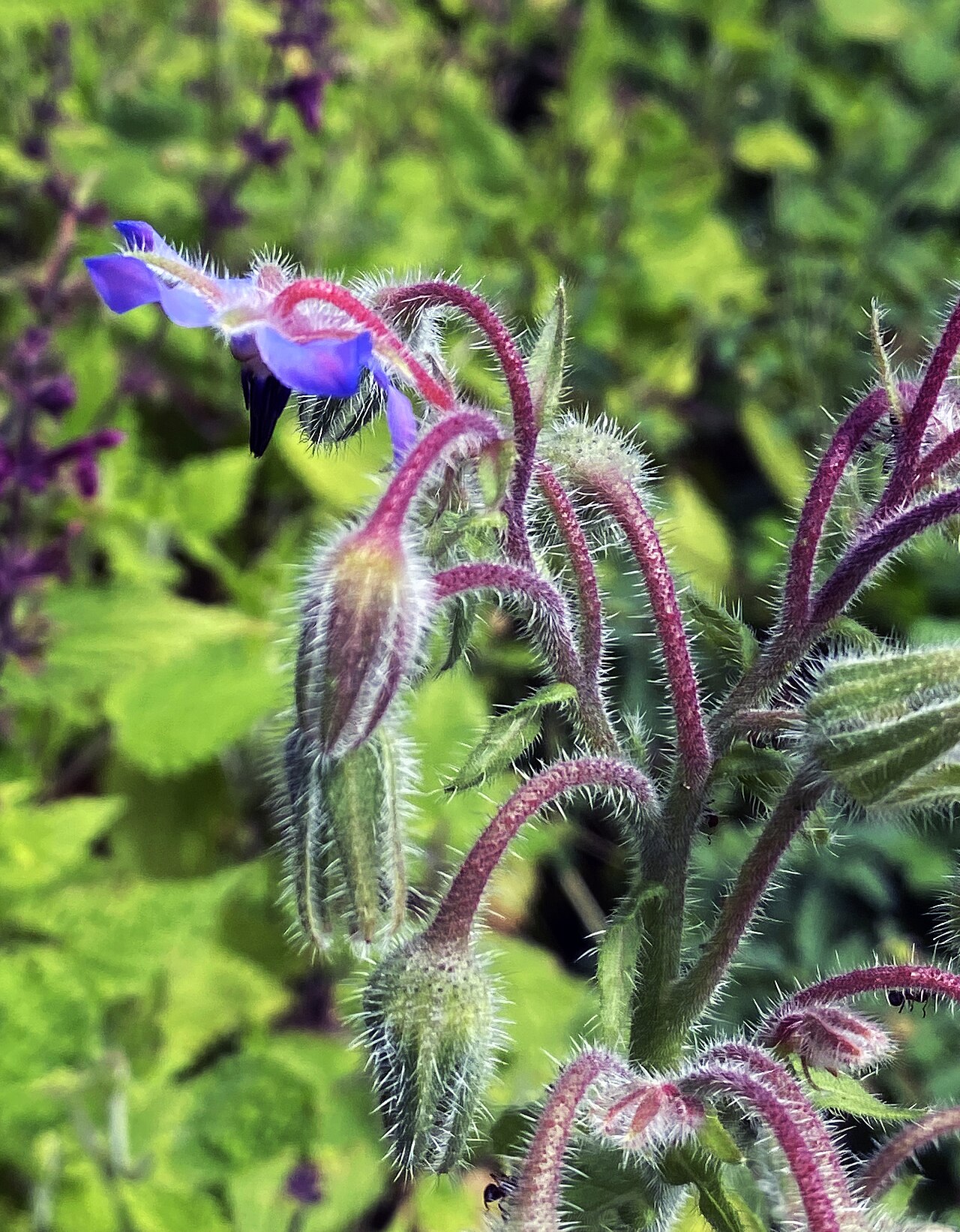
ⓒ
Photo: W. Bulach · CC BY-SA 4.0 · Original file (Wikimedia Commons)
An herb with blue star-shaped flowers and fuzzy leaves. Surprisingly, the leaves and flowers taste like cucumber. In fact, they contain the same compound that gives cucumber its aroma.
Please read before eating. This herb needs some care. See cautions
Flavor and aroma
- It tastes cool, like cucumber. The flowers have a mild, slightly sweet cucumber taste.
Fun facts
- The leaf aroma comes from the same compound (2,6-nonadienal) that gives cucumber its main aroma.
- Freshly opened flowers can start out pink and gradually turn blue.
- The British cocktail Pimm's is said to have originally used borage, later replaced by cucumber and mint.
- It's one of the herbs in Frankfurt's traditional green sauce (Grüne Soße) in Germany.
In the kitchen
Raw
- Add young leaves and flowers to salads or use them as a garnish.
Drinks
- Float the flowers on summer drinks. Infused in syrup, vinegar or cocktails, the flowers give a gentle taste and a blue tint.
Desserts
- Candy the flowers in sugar (sugar-coated) to decorate cookies and cakes.
Cooking
- In Aragon, Spain, blanched borage is sautéed with garlic and eaten with potatoes.
Goes well with
CucumberPotatoGarlicSummer drinks
Season
We're still checking the season. We'll add it once we find a source.
Details
- Korean name
- 보리지
- English names
- borage, starflower
- Scientific name
- Borago officinalis
- Family
- Boraginaceae
Same family as oyster leaf - Genus
- Borago
Cautions
The leaves and flowers contain very small amounts of pyrrolizidine alkaloids, which can harm the liver. Use it only occasionally and in small amounts in cooking, and be careful if you have liver disease.
Show sources for this page
References for this herb
- Wikipedia
- Oxford University Herbaria
- Gernot Katzer's Spice Pages
- Deep Green Permaculture
Name and classification
Photo
W. Bulach · CC BY-SA 4.0 · Original file (Wikimedia Commons)