Pandan
판단
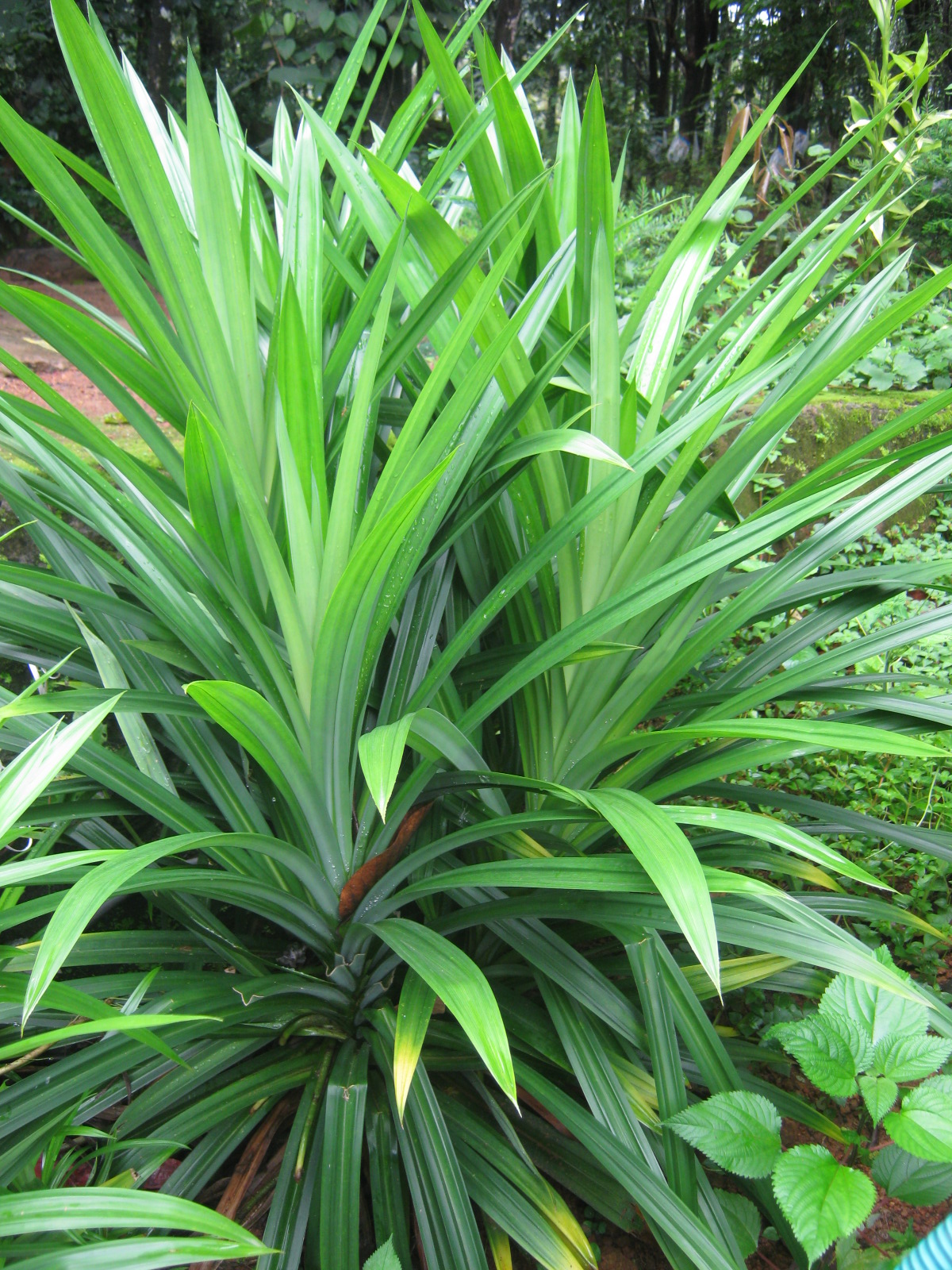
ⓒ
Photo: Zuhairali · CC BY-SA 3.0 · Original file (Wikimedia Commons)
A long leaf called "the vanilla of Southeast Asia." It contains the compound behind the smell of freshly cooked jasmine rice and freshly baked white bread. Many Southeast Asian desserts are green because of this leaf.
Flavor and aroma
- It has a sweet aroma like a mix of freshly cooked rice, toasted nuts and vanilla.
- Fresh leaves smell close to grass; heating brings out the distinctive aroma.
Fun facts
- The star of the aroma is 2-acetyl-1-pyrroline, the same compound in jasmine rice, basmati rice and the smell of white bread.
- Research has found that pandan leaves contain about 10 times as much of this compound as fragrant rice.
- Cooking ordinary rice with a pandan leaf gives it a basmati-like aroma, so it's sometimes used as a substitute.
- In Thailand, taxi drivers sometimes use it as an air freshener.
In the kitchen
Drinks
- Flavor sweet drinks and syrups with it.
Desserts
- Use it for aroma and green color in pandan cake, Indonesian klepon rice cakes and Filipino buko pandan (a coconut dessert). Use it instead of vanilla.
- Add it to rice-flour snacks and coconut milk desserts.
Rice
- Bruise the leaves slightly, tie them in a knot and add them when cooking coconut rice or plain rice.
Goes well with
Coconut milkRiceRice flourSugar
Tips
- The leaves are tough, so they aren't eaten; remove them after they've given their aroma.
Season
We're still checking the season. We'll add it once we find a source.
Details
- Korean name
- 판단
- English names
- pandan, screwpine
- Scientific name
- Pandanus amaryllifolius
- Family
- Pandanaceae
- Genus
- Pandanus
Show sources for this page
References for this herb
- Wikipedia
- Kasetsart University 학술지(판단 향 성분 연구)
- Gernot Katzer's Spice Pages
Name and classification
Photo
Zuhairali · CC BY-SA 3.0 · Original file (Wikimedia Commons)