Rock samphire
록 샘파이어
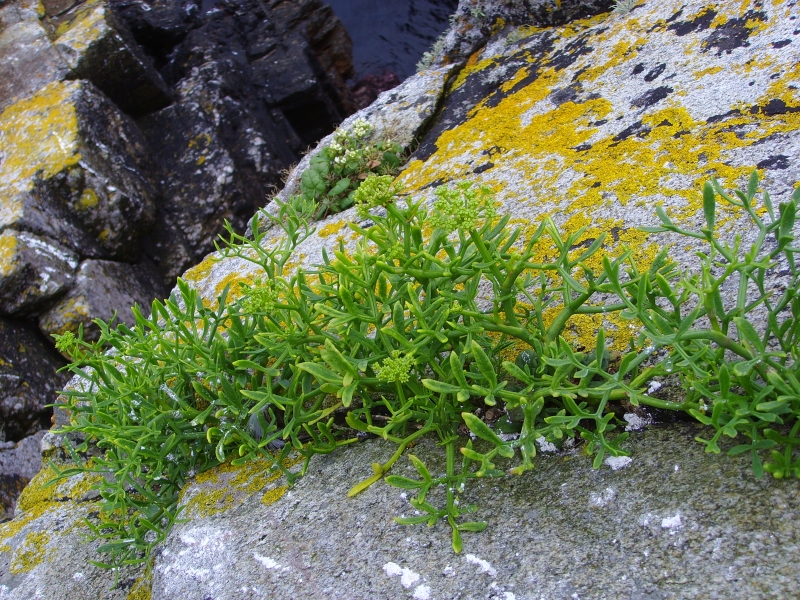
ⓒ
Photo: User:Jymm · Public domain · Original file (Wikimedia Commons)
An herb that grows on seaside cliffs, and it even appears in Shakespeare's King Lear. Picking it while hanging from cliffs was once a dangerous job. It's salty, with lemon and fennel aromas.
Flavor and aroma
- It's salty and fresh like lemon, with grassy and fennel (anise) notes.
- The 17th-century herbalist Culpeper described it as having a pleasant hot and spicy taste.
Fun facts
- In Act 4, Scene 6 of Shakespeare's King Lear, someone hangs halfway down a cliff gathering samphire. The line calls it a "dreadful trade."
- On the streets of old London it was sold with cries of "crest marine."
- It's the only species in the genus Crithmum. Its name is similar to marsh samphire (sea beans), but it's a different plant.
- In Britain, uprooting wild plants is prohibited by law.
In the kitchen
Raw
- Add the leaves and flowers to salads in small amounts, or put them on sushi.
Cooking
- Steaming, blanching or sautéing makes the taste milder. Cook it with fish, or add it to soups and stews.
Sauces
- Chop it into pesto and salsa.
Pickles
- Pickle the stems, leaves and young seed pods in vinegar or olive oil. Paccasassi del Conero from Italy's Marche region is eaten as a starter or served with fish and meat dishes, pizza and sandwiches.
Other ideas
- Use pickled seed pods instead of capers. There's also gin flavored with rock samphire.
Goes well with
FishQuail eggsEggsStrong cheeseBeer
Tips
- Once it flowers, the flavor starts to decline. Fresh rock samphire keeps only a few days; pickles keep a long time.
Season
We're still checking the season. We'll add it once we find a source.
Details
- Korean name
- 록 샘파이어
- English names
- rock samphire, sea fennel
- Scientific name
- Crithmum maritimum
- Family
- Apiaceae
- Genus
- Crithmum
- Other names and notes
- Italian: paccasassi
Show sources for this page
References for this herb
- Wikipedia
- Specialty Produce
- Trinity College Dublin
- The Met Cloisters 블로그
- Produce Business UK
Name and classification
Photo
User:Jymm · Public domain · Original file (Wikimedia Commons)