Stevia leaf
스테비아잎
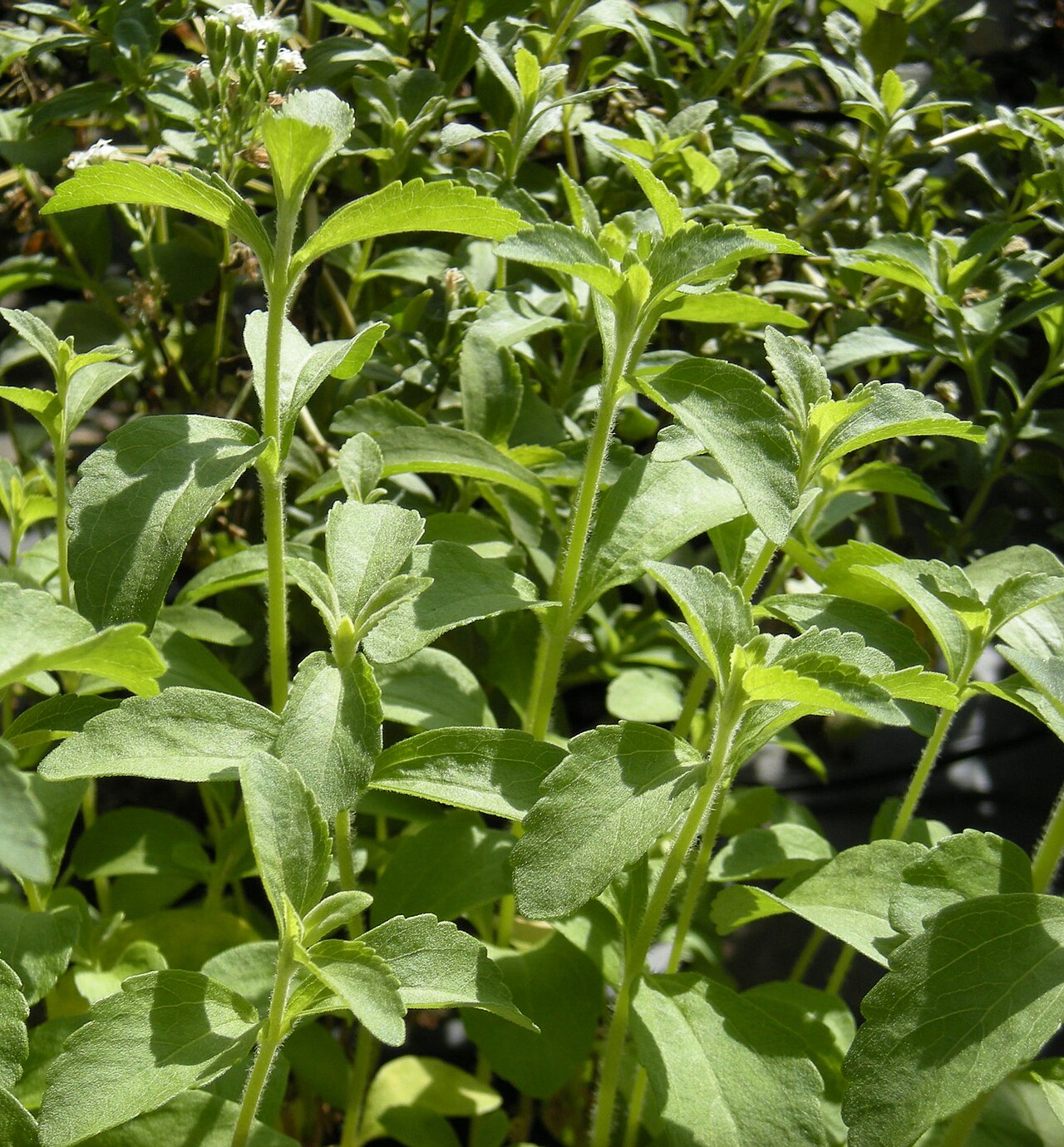
ⓒ
Photo: Ethel Aardvark · CC BY 3.0 · Original file (Wikimedia Commons)
Chew one leaf and sweetness spreads as if you ate sugar. The Guaraní people of South America have called this leaf "sweet herb" and added it to drinks for more than 1,500 years.
Flavor and aroma
- It's sweet like sugar, but you notice it slowly and the sweetness lingers.
- Too much leaves a bitter, licorice-like aftertaste.
Fun facts
- Its Guaraní name, ka'a he'ẽ, means "sweet herb."
- The sweet compounds, steviol glycosides, are about 200–300 times sweeter than sugar and aren't digested, so they have no calories.
- It was first developed as a commercial sweetener in Japan in the 1970s.
- In the US, only certain purified compounds are allowed as food additives; whole leaves and crude extracts haven't been approved as food additives.
In the kitchen
Drinks
- Add fresh or dried leaves to tea and drinks to sweeten them.
Desserts
- Sweeten desserts with water the leaves have been steeped in.
Goes well with
Herbal teaLemonMint
Tips
- Leaves can taste more bitter and grassy than refined sweeteners, so start with a little.
Season
We're still checking the season. We'll add it once we find a source.
Details
- Korean name
- 스테비아잎
- English names
- stevia, sweetleaf, candyleaf
- Scientific name
- Stevia rebaudiana
- Family
- Asteraceae
- Genus
- Stevia
- Other names and notes
- Guaraní: ka'a he'ẽ
Show sources for this page
References for this herb
- Britannica
- Wikipedia
- The Sweetener Book
- Chemie in unserer Zeit(라이프치히대)
Name and classification
Photo
Ethel Aardvark · CC BY 3.0 · Original file (Wikimedia Commons)