Alexanders
알렉산더스
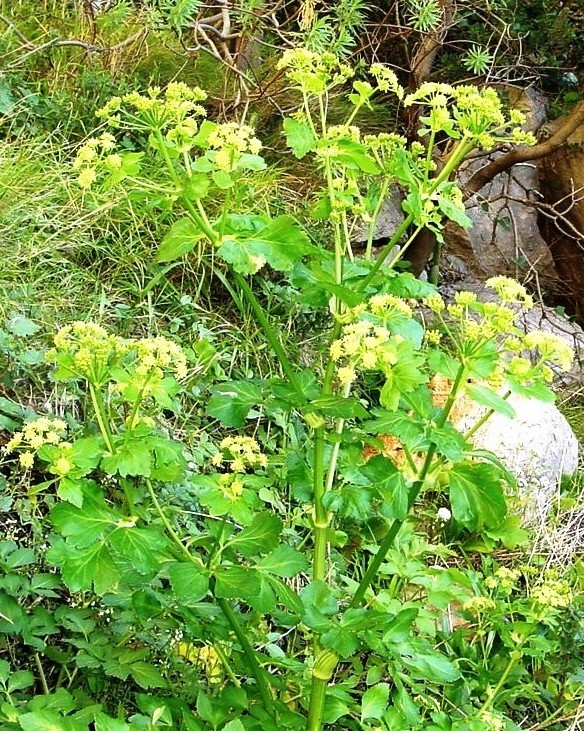
ⓒ
Photo: tato grasso · CC BY-SA 3.0 · Original file (Wikimedia Commons)
A vegetable the Romans brought to Britain, later forgotten when celery took over. It has an unusual taste: celery and parsley with a myrrh-like aroma. It still grows on British coasts and at old monastery sites.
Flavor and aroma
- It tastes like a mix of celery and parsley, sharper than celery.
- It has a myrrh-like aroma.
Fun facts
- The ancient Roman scholar Pliny called it smyrnium because of its myrrh-like scent.
- The scientific name olusatrum means "black vegetable." The seeds turn black when ripe.
- The Romans brought it to Britain, and in the Middle Ages it was grown in monasteries.
- It was almost forgotten in the 19th century as celery was improved.
In the kitchen
Soups
- Make a clear soup with clams and alexanders.
Stems
- Candy young stems in sugar like angelica. Boil thick stems to make stock.
Leaves
- Use the leaves like celery or lovage in soups, stews and sauces for meat and fish.
Flowers
- Batter and fry the flower clusters.
Seeds
- Grind the seeds to use instead of pepper, or to flavor stock and rice.
Roots
- Roast the roots like parsnips.
Goes well with
FishClamsMeatRice
Season
We're still checking the season. We'll add it once we find a source.
Details
- Korean name
- 알렉산더스
- English names
- Alexanders, black lovage, horse parsley
- Scientific name
- Smyrnium olusatrum
- Family
- Apiaceae
- Genus
- Smyrnium
Cautions
Be careful if you're allergic to celery (it's in the same carrot family).
Show sources for this page
References for this herb
- Foraging Course Company
- Seedaholic
- Eat Weeds
- Useful Temperate Plants
- Frustrated Gardener
Name and classification
Photo
tato grasso · CC BY-SA 3.0 · Original file (Wikimedia Commons)