Rose geranium
로즈 제라늄
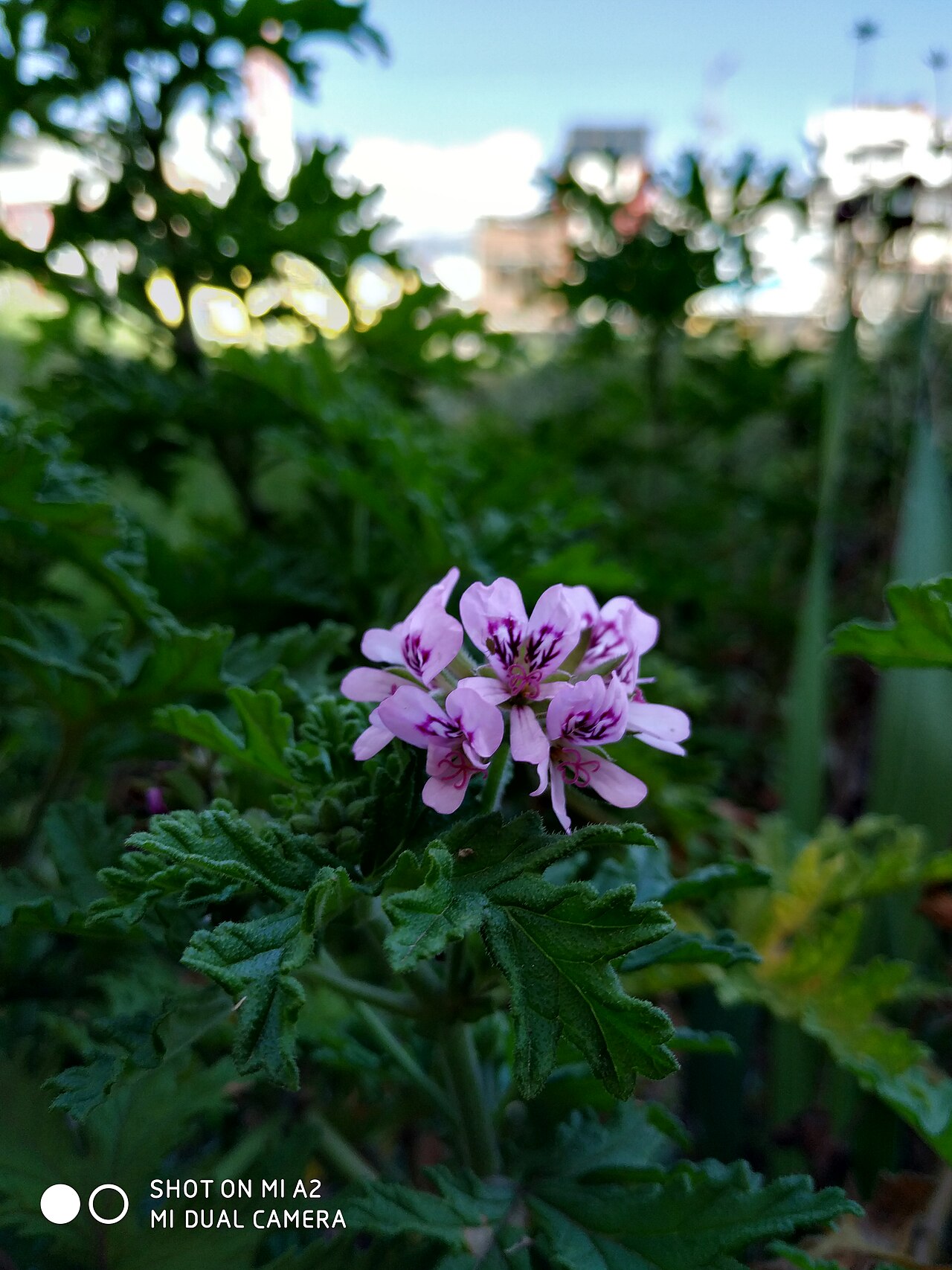
ⓒ
Photo: Nicolas Ramirez · CC BY-SA 4.0 · Original file (Wikimedia Commons)
A geranium whose leaves smell like a mix of rose and lemon when gently rubbed. Line a cake tin with these leaves and bake, and the cake picks up a gentle rose scent.
Flavor and aroma
- It smells of rose and lemon. The leaves are used for aroma rather than texture.
Fun facts
- The genus name Pelargonium comes from the Greek for "stork." The seed pods look like a stork's beak.
- The scientific name graveolens means "strong-smelling."
- It comes from South Africa and reached Britain in 1774.
- "Geranium oil" from its leaves is sometimes blended in place of expensive rose oil.
In the kitchen
Drinks
- Steep the leaves in syrup for 4 hours or more and add it to cocktails (gin, tequila) or sparkling water. Make cordial too.
Desserts
- Steep the leaves in cream, ice cream, sorbet and puddings for aroma.
Baking
- Line the bottom of a cake tin with leaves, pour in the batter and bake. Peel off the leaves after baking.
Jam and jelly
- Add water infused with the leaves to apple jelly for a rose-scented jelly.
Sugar
- Layer leaves in sugar to make rose-scented sugar.
Garnish
- Use the flowers to garnish salads and desserts.
Goes well with
BerriesLemonCreamAppleGin
Season
We're still checking the season. We'll add it once we find a source.
Details
- Korean name
- 로즈 제라늄
- English names
- rose geranium, rose-scented pelargonium
- Scientific name
- Pelargonium graveolens
- Family
- Geraniaceae
- Genus
- Pelargonium
Cautions
Not every geranium (pelargonium) is edible. Check that it's one known to be edible, such as Pelargonium graveolens, before using.
Show sources for this page
References for this herb
- Living Seeds
- Monticello(토머스 제퍼슨 재단)
- Random Harvest
- Cocktails & Bars
- Christina Stapley
Name and classification
Photo
Nicolas Ramirez · CC BY-SA 4.0 · Original file (Wikimedia Commons)