Lemon balm
레몬 밤
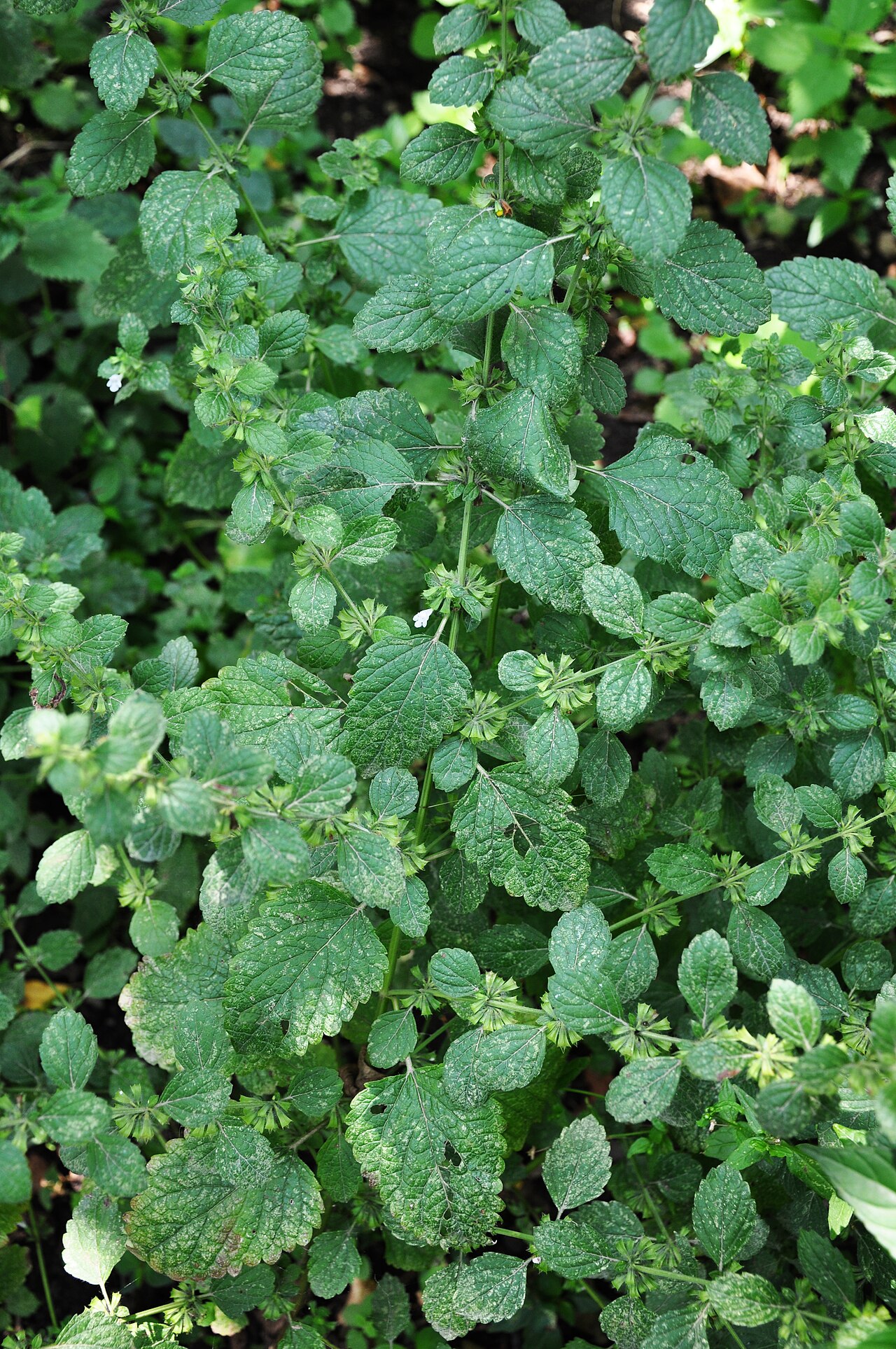
ⓒ
Photo: Lazaregagnidze · CC BY-SA 4.0 · Original file (Wikimedia Commons)
It looks like mint, but its leaves smell of lemon when you touch them. Bees love its flowers, so it got a name meaning "honeybee" in Greek. It's also used in the French liqueur Chartreuse.
Flavor and aroma
- It has a sweet-tart lemon scent with mint (from citral and citronellal).
- It's gentle and not sour like lemon.
Fun facts
- The genus name Melissa means "honeybee" in Greek.
- It was named Herb of the Year in 2007.
- There's a record of it being grown on Thomas Jefferson's farm.
- It's one of the aromatics in Chartreuse and Bénédictine liqueurs.
In the kitchen
Salads
- Chopped leaves give a fruit salad a lemon scent without sourness.
Drinks
- Make tea with fresh or dried leaves. Make a syrup and add it to iced tea too.
Desserts
- Steep the leaves in fresh cream for panna cotta or crème brûlée. Add it to lemon cookies, sorbet and fruit tarts.
Cooking
- Use it to garnish fish and seafood, and in rice and omelets. Add it to olive oil vinaigrette too.
Other ideas
- Steep it in honey for a month to make lemon balm honey, and use it instead of lemon in jams and jellies.
Goes well with
FruitFishHoneyParsleyBasilDillChervilChives
Tips
- Use the young leaf tips. Large, older leaves can taste soapy. Drying weakens the aroma.
Season
SpringSummerAutumn
Harvest in open fields in Korea: 5–10 (May–October)
Based on the leaf harvest time (May–October) in Nongsaro's rooftop herb garden guide. We grouped March–May as spring, June–August as summer and September–November as autumn.
Details
- Korean name
- 레몬 밤
- English names
- lemon balm, melissa
- Scientific name
- Melissa officinalis
- Family
- Lamiaceae
- Genus
- Melissa
Show sources for this page
References for this herb
- Herb Society of America
- Specialty Produce
- MasterClass
- Montréal Botanical Garden
Name and classification
Season
- 농촌진흥청 농사로 - 옥상허브정원 (허브정원관리표) — “레몬밤: 수확 5-10월 잎을 채취한다”
Photo
Lazaregagnidze · CC BY-SA 4.0 · Original file (Wikimedia Commons)