Ice plant
아이스 플랜트
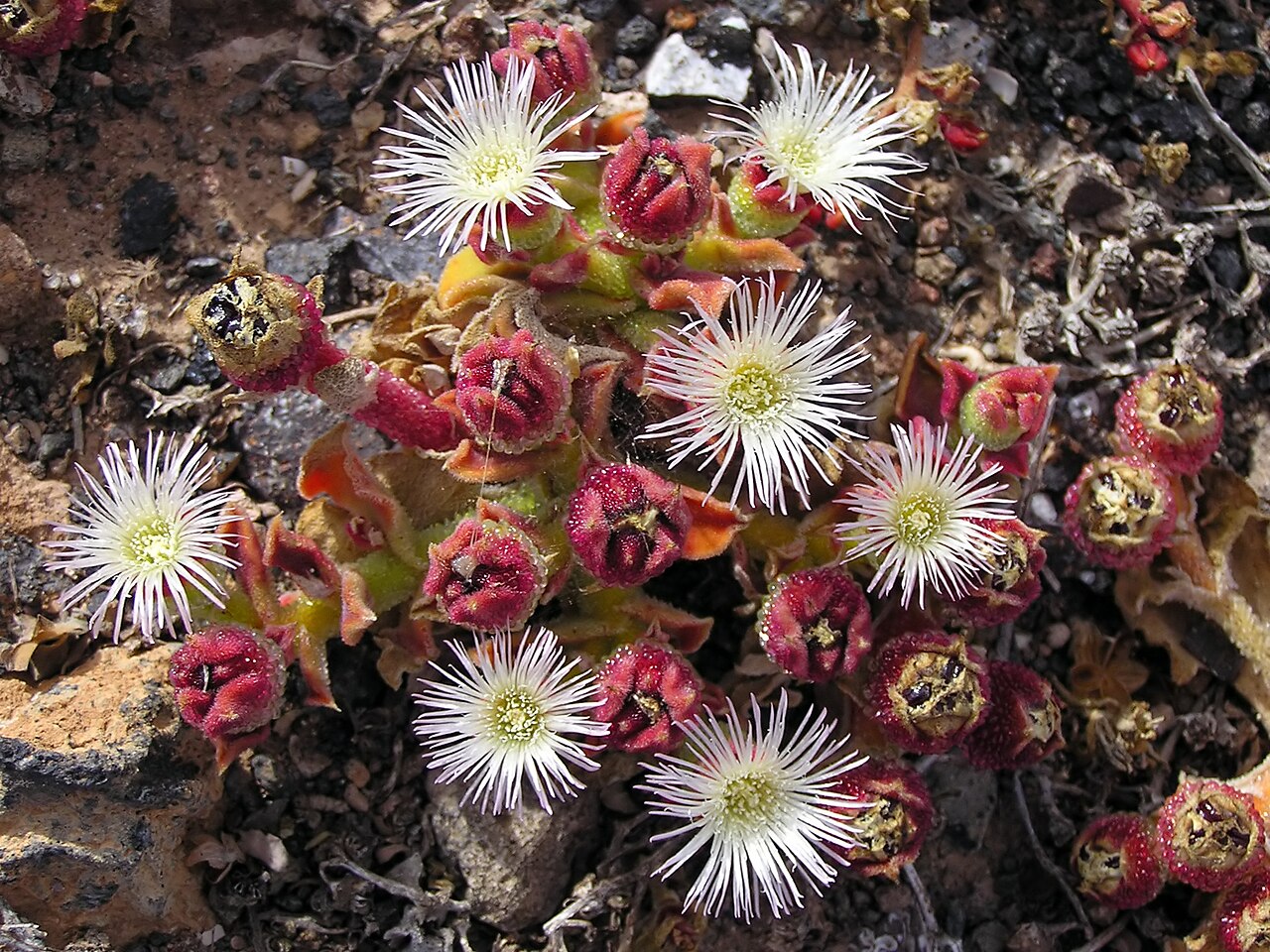
ⓒ
Photo: Yummifruitbat · CC BY-SA 4.0 · Original file (Wikimedia Commons)
Its leaves and stems are covered in sparkling, clear droplets like grains of ice. Bite into it and the juice pops out, salty as if sprinkled with salt.
Flavor and aroma
- It tastes salty and slightly sour.
- It's juicy and crunchy, and stays crunchy even when cooked.
Fun facts
- The sparkling beads are water-storing cells (bladder cells).
- The scientific name crystallinum means "having crystals."
- There's also a story that it got the name "ice plant" because its leaves feel cold even on the hottest days.
- After growing methods were refined in Japan, it has often appeared on East Asian restaurant menus since the 2010s. In Japan it's also called "salt leaf" or barafu.
In the kitchen
Raw
- Add the leaves and stems to salads for a salty crunch. Mixed with other vegetables, you need less dressing.
Cooking
- Blanch it like spinach, or sauté briefly with butter and salt as a side vegetable. It can also be pickled.
Garnish
- Put it on fish, seafood or omelets for saltiness and texture. Use it to garnish cocktails too.
Goes well with
FishSeafoodEggsSalad greens
Tips
- Choose plump leaves with intact beads that feel cold and firm. It spoils quickly, so eat it soon.
Season
We're still checking the season. We'll add it once we find a source.
Details
- Korean name
- 아이스 플랜트
- English names
- common ice plant, crystalline ice plant
- Scientific name
- Mesembryanthemum crystallinum
- Family
- Aizoaceae
- Genus
- Mesembryanthemum
- Other names and notes
- Native to South Africa
Cautions
The name "ice plant" is also used for other ornamental plants that aren't eaten. Tell them apart by the scientific name (Mesembryanthemum crystallinum).
Show sources for this page
References for this herb
- Wikipedia
- SANBI(남아프리카 국립생물다양성연구소)
- Foods 학술지(코넬대 관능 평가 연구, 2022)
- Serious Eats
- The Gourmantic Garden
Name and classification
Photo
Yummifruitbat · CC BY-SA 4.0 · Original file (Wikimedia Commons)